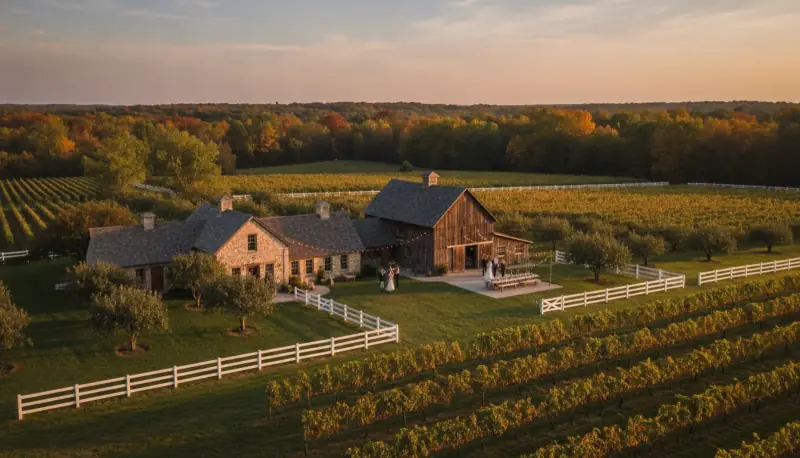
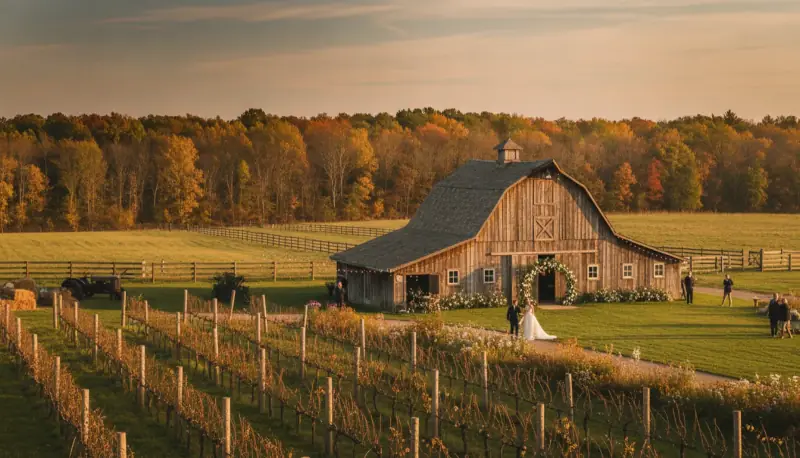
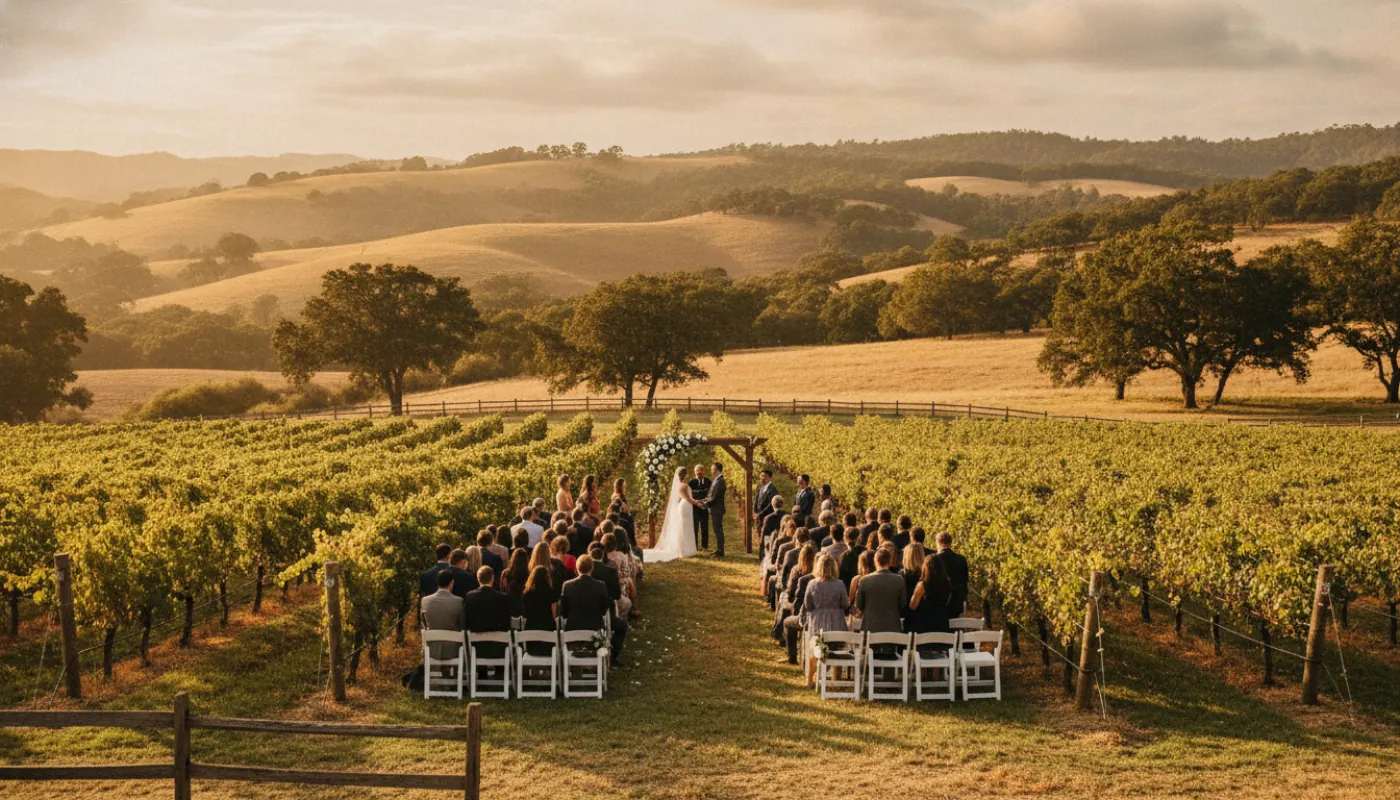
A vineyard wedding is not a casual backyard celebration. It's a deliberate choice to anchor your most important day in working agriculture, in a landscape shaped by the people who planted and tend it. The appeal is obvious: rolling vines, mature oak trees as ceremony backdrops, a natural story that unfolds across the rolling terrain. But the reality of executing a wedding on working vineyard land is more specific than it appears. If you're considering a vineyard venue, you need to understand what actually works logistically, when you can realistically host guests, and what the real cost expectations are.
The Vineyard Wedding Appeal
Vineyard weddings command premium pricing, and couples pay it because the landscape does the design work. An outdoor ceremony at six in the evening with the sun dropping below the western hills requires no additional decoration, the vines themselves frame the moment. Reception under a market tent surrounded by trellis and soil creates an implicit narrative: you are celebrating among a crop, not just a scenic backdrop. The couple isn't just using the land; they're acknowledging the work embedded in it.
The appeal extends to your guest experience. Wine country draws visitors year-round, and most guests treat a vineyard wedding as a destination event. This changes the social dynamic. People stay longer, they arrive earlier, they plan the weekend around it rather than squeezing it into a Saturday afternoon. The venue itself (the rows, the valley vistas, the open-air architecture), creates natural entertainment value without requiring curated programming. Guests spend time in the landscape, not just in an event space.
Practically, this also means fewer operational constraints than an indoor venue. Capacity isn't locked into a room dimension; ceremony and reception can happen in different zones of the property. Timing can be flexible. But flexibility in geography creates constraints elsewhere (particularly around weather protection, utility infrastructure, and guest access), that you'll need to plan for explicitly.
Season & Timing: When Vineyards Can Actually Host
Vineyard viability for weddings is sharply seasonal. The most common misconception is that summer is the optimal wedding season at a vineyard. It is not. July and August are harvest prep and, in many regions, heat stress. The vines need water and attention; the grounds may be restricted to working hours. September through October is harvest itself: many vineyard operations shut down to visitors during active picking, and the ones that don't are stressed, noisy, and potentially disrupted if weather forces harvest decisions mid-event.
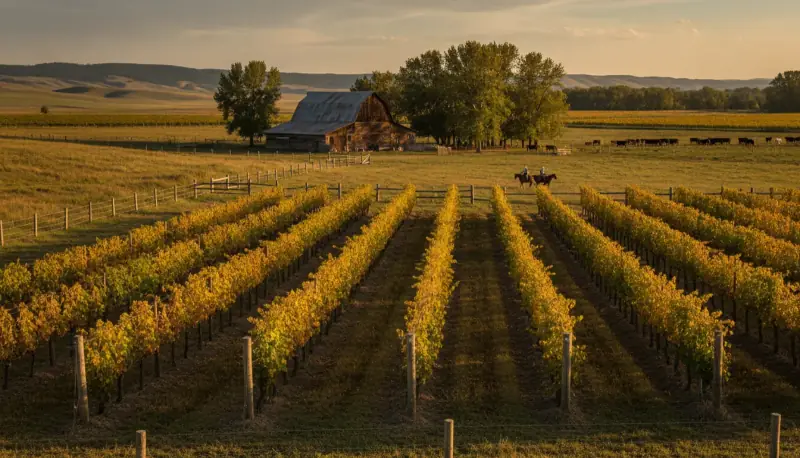
Late April through May is genuinely optimal. The vines are leafed out and visually mature without the visual monotony of summer. Growth is vigorous. Weather is stable across most wine regions. October (after harvest wraps) through early November is the second-best window: the vines color, the light is exceptional, and the property has recovered from harvest intensity. Late spring and fall offer natural beauty without operational friction.
Winter and early spring can work if you're indifferent to snow or rain, and some vineyards accept winter events at reduced rates. February and March are generally dormant at the vine level, no visual interest and muddy grounds if rain is heavy. November is weather-dependent; it can be spectacular or gray and cold. Always confirm the vineyard's actual operational calendar and any harvest-related restrictions before committing to a date. A venue that hosts freely in June may be off-limits in September, even though both are technically "available."
Logistics That Matter: Infrastructure & Access
Vineyard venues require you to think about basics that a ballroom handles invisibly. There is no loading dock. Guest parking may involve a shuttle from an off-site lot or a long gravel drive. Restroom capacity often relies on temporary rentals. Electricity for catering, ceremony sound, and lighting may require a temporary pole or generator. Cell signal can be spotty. Internet, if needed for music or coordination, may not exist.
These aren't deal-breakers, but they're cost multipliers and logistical variables. A caterer used to working in a venue kitchen may need to set up a full catering tent. Sound equipment for a ceremony with 100 guests on open ground requires professional-grade speakers and a sound tech on-site for the duration. Lighting after sunset moves from "ambient uplighting" to "essential infrastructure", you're not lighting a structured room, you're lighting a sprawling outdoor space.
Accessibility is particularly critical on vineyard terrain. Guests with mobility challenges may face gravel paths, uneven ground, and distance from parking. Some vineyards have paved or improved accessibility routes; many don't. Confirm chair and restroom accessibility early. If significant guests have mobility limitations, this may rule out certain vineyard properties.
Weather contingency is not optional. Most vineyards offer some covered space, a pavilion or barn, but full tent coverage for a 150-person reception is an additional rental cost and a logistics problem (anchoring in vineyard soil, power access, heating). Spring and fall are less predictable than summer, despite being logistically better. Discuss what weather actually closes the venue versus what you'll manage around.
Understanding Vineyard Wedding Costs
Vineyard venues operate on a tiered pricing model very different from dedicated event venues. There is usually no venue rental fee per se. Instead, you commit to a food and beverage minimum, often through an approved catering list. That minimum typically ranges from $2,500 to $8,000 depending on guest count and the vineyard's tier. A 75-person wedding with a $6,000 minimum means your per-head catering spend is $80, high enough to exclude budget caterers, low enough that you're not covering a full white-glove production.
Additional costs accumulate: shuttle service ($500–$1,200 if parking is off-site), rental tent if weather backup is required ($2,000–$6,000 depending on size and coverage), rental chairs and tables if the venue doesn't provide them, and a separate ceremony setup fee that some vineyards charge ($500–$1,500). Wineries themselves may charge a corkage fee for alcohol that isn't their own product, or alternatively require you to feature their wines on your menu, which affects per-person catering costs.
Labor and coordination costs are not trivial. A day-of coordinator familiar with the specific vineyard layout and utility setup is nearly mandatory, particularly if you're not local. Lighting installation and management ($1,500–$3,500 for full evening lighting) is separate from catering labor. Cleanup, which a dedicated event venue includes, may be on you or the caterer.
Total budget expectation: for a 100-person vineyard wedding, plan $30,000–$60,000 in total event costs, with venue+catering and logistics (tent, shuttle, lighting, coordination) comprising roughly 40–50% of the total. The landscape is genuinely beautiful, but it is not inexpensive.
What to Ask When Evaluating a Vineyard Venue
Start with the operational calendar. In writing, ask when the vineyard hosts events and when it doesn't. Verify that your target date isn't during harvest, replanting, or major treatment. Ask how many events they host annually and whether they take overlapping bookings (the answer affects noise and shared staff).
Site the venue for ceremony and reception zones. Does the property have a natural ceremony focal point, or are you creating one? Where does the tent go, and what's the rain-day experience? Walk the guest path from parking to ceremony space to reception, estimate the walk distance and surface type. Ask about accessible routes explicitly if needed.
Confirm utilities and what's included. Electricity for lighting, catering tents, and sound? Restroom facilities, or is a temporary rental required? Parking count and surface. Cell and Internet service, or plan accordingly. Some vineyards include basics; many charge for temporary infrastructure on top of the catering minimum.
Ask about catering restrictions. Is the approved vendor list exclusive, or can you bring your own caterer? What are the markup or corkage policies? Can your caterer use their own tent, or must they set up within the venue's infrastructure? These constraints directly affect cost and creative control.
Finally, ask about weather contingency and what happens if the day is unusable. Is there a rain date option? Can you reschedule and keep your deposit, or is it forfeited? Some vineyards have indoor backup space; many don't. Understand the cancellation and rescheduling policy in writing before committing.
A vineyard wedding is an aesthetic choice with real operational complexity. The landscape delivers the beauty; your planning delivers the execution. Start your venue search early, late spring and fall dates book quickly, and allocate time for vendor coordination and logistics that a more conventional venue abstracts away.