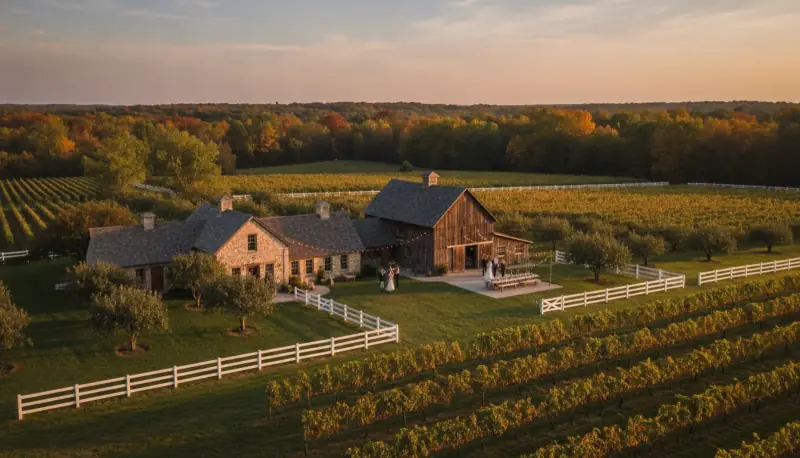
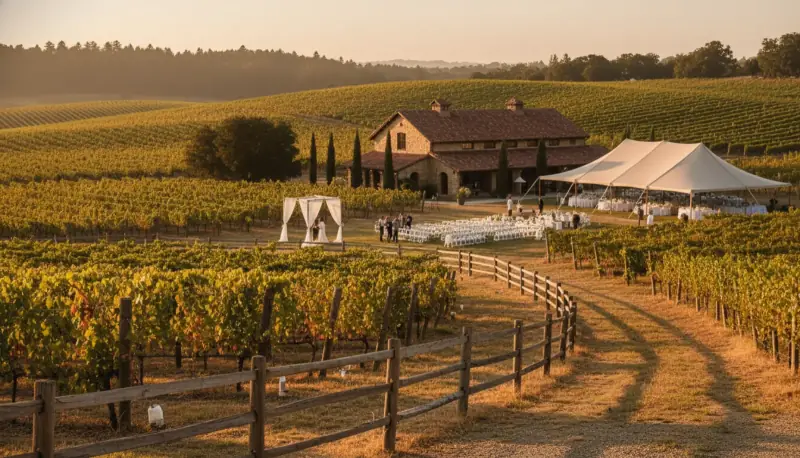
Couples planning a wedding often compare barn venues to traditional event spaces: country clubs, hotels, purpose-built reception halls. But a barn wedding venue on a working farm is fundamentally different, not just visually but operationally. If you're considering hosting your ceremony and reception in an actual working barn, surrounded by pasture and equipment, you're signing up for a distinct set of logistics, seasonal constraints, and genuine rural charm that no renovated event venue can replicate. This guide walks through what truly sets farm barn weddings apart and what couples need to understand before booking.
The Farm Setting: Why Authenticity Carries Trade-Offs
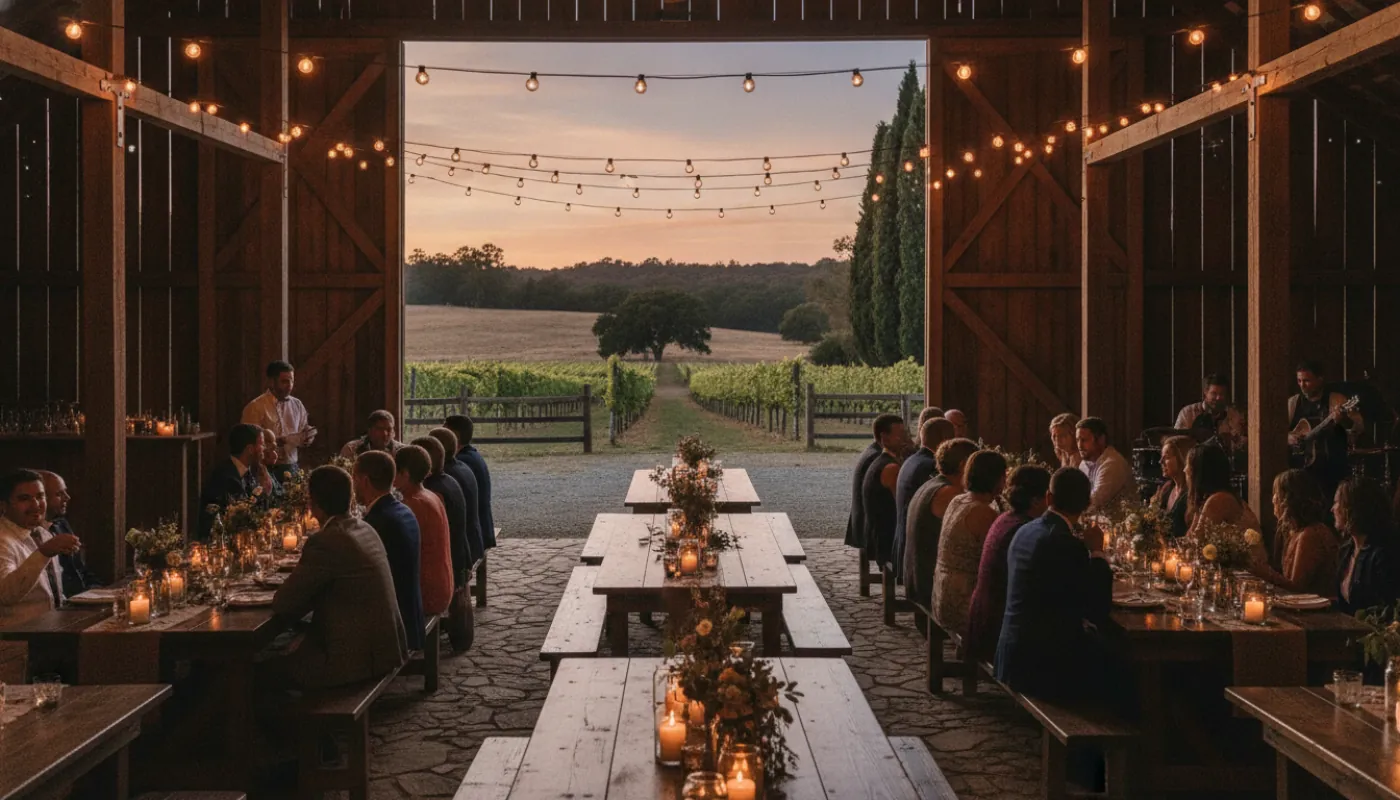
A working farm barn is not a wedding venue that happens to look rustic, it's a barn that operates as a barn. That authenticity is the draw. Exposed beams, weathered wood, natural light through high windows, and the smell of hay create an atmosphere that design budgets and reclaimed-wood installations cannot manufacture. The backdrop is genuine, the character is earned, and the location feels like a destination rather than a decorated indoor space.
But that authenticity comes with operational constraints. Unlike a purpose-built venue, the farm is not designed around guest comfort first. Restrooms may be retrofitted into outbuildings or the farmhouse, not integrated into a climate-controlled event space. Parking may be a gravel lot, not a paved lot with clear signage. The electrical panel was built to power farm equipment, not string lights and a caterer's cold-prep station. Ventilation exists to keep hay fresh, not to manage 150 people's body heat on a July afternoon.
Working with the farm rather than against it is essential. Experienced couples ask about the barn's original structure, layout, and real constraints before picturing the vision. They tour the venue during the same season they plan to marry, not just to see the aesthetics but to understand weather patterns, bug activity, and how the farm operates during event season.
Seasonal Rhythms & Weather Realities
Farm calendars and weather windows drive the entire wedding timeline in ways suburban venues never do. Many farms have harvest, planting, or livestock cycles that limit available dates. A dairy farm may be busiest in spring when calves arrive; a crop farm may be inaccessible during harvest. Ask directly: what months are actually available, and why?
Weather is also less forgiving. A traditional indoor venue has climate control and a roof; a barn with open doors has natural ventilation but also natural exposure. Late-spring weddings in agricultural regions often face unpredictable rain, wind, or frost. Fall weddings, popular for the light and cooler temperatures, can be interrupted by early frost or harvest activity. Winter is rarely an option on working farms, the barn may be unheated, and field access may be impossible. Summer is hot, and barns can be sweltering without significant ventilation upgrades or a well-placed tent.
Backup plans are not optional. Most farm venues require couples to secure a tent or move the reception indoors to the farmhouse or a secondary building. This is not a failure of the venue; it's a realistic acknowledgment of farm life. Factor the tent rental into your budget and timeline. Confirm what the farm provides (tables, chairs, basic lighting) and what you're responsible for (catering, floral, sound, additional structures). Understand the farm's cancellation and rescheduling policy, if harvest starts early or equipment failure occurs, what flexibility does the contract allow?
Cost & Operational Differences
A barn venue rental on a working farm is usually less expensive than a comparable event space at a hotel or country club. But the structure of costs is different, and hidden expenses can accumulate. Most farm venues charge a venue rental fee (often $1,500–$5,000 depending on region and season) plus a per-head catering minimum if they have an approved caterer. Some allow outside catering but require a kitchen-use fee or liquor licensing coordination.
What's often not included is what couples expect: the barn may provide only the structure and tables. You arrange your own lighting, sound, heating (if needed), restroom facilities, parking attendant, and waste removal. A weather backup (tent or indoor alternative) is your cost and your responsibility. Some farms add service fees for setup time, early arrival, or late departure. Others charge extra for usage of the farmhouse kitchen or commercial kitchen access.
Compared to a traditional all-inclusive venue, a working farm requires you to assemble a deeper vendor team: rental company for tent/tables/chairs/linens, separate sound and lighting specialists, portable restroom provider, and often a wedding planner to coordinate the farm-specific logistics. Those fees, while individually reasonable, compound quickly. The trade-off is control and authenticity. You're not paying for the venue's profit margin on rentals and add-ons, you're paying the farmer for the space and liability, and assembling the rest yourself.
Guest Experience on Working Farms
A farm wedding is inherently different for guests, not better or worse, but different. The experience begins with directions to a rural address, gravel parking, and no valet service. Guests in heels navigate unpaved terrain. The ceremony may be at dusk to chase the best light, not at 4 p.m. Reception space is often a large but not climate-controlled barn, which means bug spray stations, fans running, and the knowledge that you're sharing the space with the building's original purpose.
This works beautifully for guests who value intimacy and setting. Rural guests, farm families, and couples' friends who embrace the adventure find farm weddings memorable and joyful. Urban guests unfamiliar with farms sometimes find the lack of creature comforts off-putting, no air conditioning, no coat check, limited restroom facilities, the smell of hay.
Be intentional about guest comfort. Provide fans or heaters as needed. Position portable restroom facilities discreetly but clearly. Offer transportation from a centralized parking area if the farm is truly remote. Choose a caterer experienced in farm weddings who can work with limited kitchen facilities and outdoor serving. Communicate the farm experience upfront in your invitations, guests who know they're dressing for a rural outdoor event and have clear parking instructions arrive ready to celebrate.
Planning Your Farm Wedding Timeline
Farm weddings require an earlier booking window than traditional venues. Most working farms book a year to eighteen months in advance because their availability is genuinely limited. Once you've toured and selected a farm, reserve the date immediately and sign the contract. Then plan backward from your wedding date with the farm's seasonal constraints and your vendor timeline in mind.
Secure your weather backup (tent, indoor alternative, date shift policy) before you book other major vendors. This is unique to farm weddings. A caterer and florist can adapt to many spaces, but the backup itself is the foundation. Visit the farm at least twice, once during the same season as your wedding date and once closer to the event. You need to understand the venue's real character in your season, the farm's workflow, and any seasonal surprises.
Communicate regularly with the farm owner or manager. They're not full-time event coordinators; they're farmers who also rent their barn. Clarify setup times, breakdown times, vendor load-in procedures, parking for rental trucks, electrical access, and water access. Get these details in writing as an addendum to the contract. A simple email exchange documenting the plan prevents day-of confusion.
A farm barn wedding rewards couples who see the venue not as a blank canvas to transform but as a collaborator. The barn's character is the whole point. Plan with the farm, not against it, and the authentic, memorable celebration that results justifies the extra logistics.