Christmas tree farms represent one of the highest-margin seasonal agritourism experiences available. When executed well, a choose-and-cut operation turns a commodity, the tree itself, into a multi-hour family event that commands premium pricing and generates social media buzz. Unlike generic u-pick operations that rely on volume, a thoughtfully managed choose-and-cut experience creates scarcity and urgency. Families book December dates weeks in advance, pay for parking or entry, upgrade to hayrides, buy wreaths and bundled trees for shipping, and return annually. The best farms treat tree selection as a curated ritual rather than a transactional harvest. This guide is built on interviews with operators across the northern and middle states who've scaled choose-and-cut from a side venture into their primary December revenue stream.
Sizing Your Operation for Sustainable Visitor Flow
Your acreage footprint determines the maximum guest density your farm can absorb without degrading the experience or exhausting your staff. A 10–20 acre working block planted at standard density (roughly 1,500 trees per acre), gives you 15,000–30,000 trees at harvest maturity. But you won't harvest all of them. Most farms reserve 40–60% of their mature trees for the choose-and-cut season and direct the remainder toward wholesale distribution or mulching. This means a 15-acre block yields 6,000–9,000 harvestable trees for visitors, enough to accommodate 300–500 families over an 8–10 week season if each group spends 30–60 minutes in the field.
Visitor saturation occurs faster than most operators expect. Once parking fills, bathrooms reach capacity, or staff shifts extend past 10–12 hours, the guest experience collapses into a rushed, impersonal transaction. Cap your daily visitor limit deliberately. Track attendance by hour during peak weeks (mid-November through mid-December) and enforce a reservation system that spaces arrivals. Some farms use 2-hour windows; others implement ticketed entry that limits simultaneous field access. The overhead of managing a waitlist is trivial compared to the reputational damage of turning away a family mid-season or forcing them to wait 90 minutes in a cold parking lot.
Preparing Trees and Grounds Well Before Season Opens
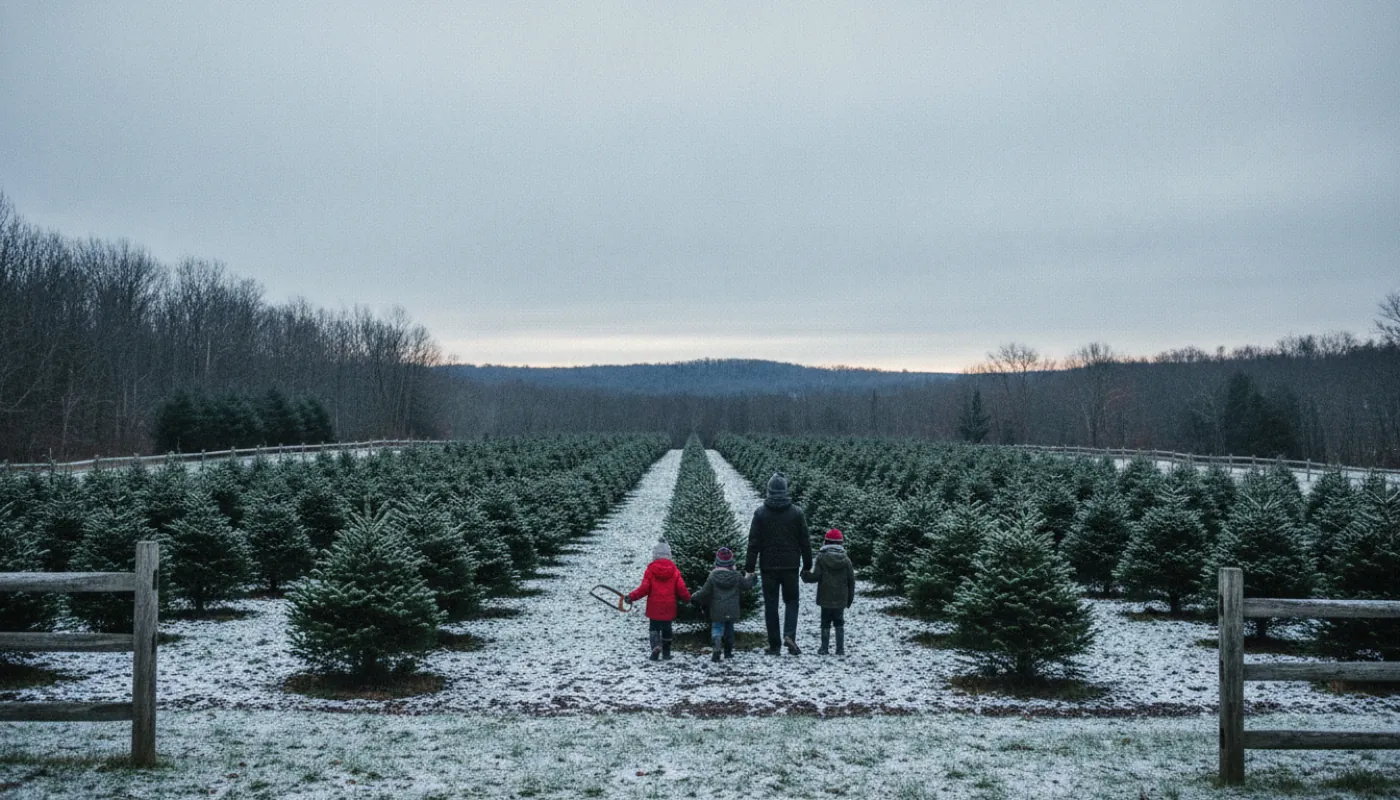
Tree preparation begins in fall, months before your first guest arrives. Identify blocks coming into prime harvest age (typically 7–10 years old depending on species and growing conditions) and scout for defects. Thin competing limbs, remove lower branches to create clean trunk access for saws, and mark any trees diseased or misshapen enough to exclude from the pick zone. A healthy 6–7 foot tree should have dense, symmetrical branching from near the base, the shape that families photograph and share on social media.
Your grounds preparation is equally critical. Clear and rake all pathways to remove tripping hazards and fallen debris. Mark rows with painted stakes or flags so families don't wander into unfinished blocks or protected saplings. Set up a central cutting station near parking: a covered area with sharpened bow saws, netting supplies, twine, and a staff member trained to demonstrate proper cutting technique and bind trees for loading. Stock portable sanitizing stations and ensure bathrooms are staffed and serviced multiple times daily. Some farms build a small warming tent with hot cider or hot chocolate; this soft amenity drives reviews and justifies premium pricing. Test all equipment in early November; a broken saw or dead vehicle in December costs you far more than rental replacements in the off-season.
Guiding Guests Through Selection and Safe Harvest
The moment a family enters your field, they're making a decision. Most visitors arrive with a loose height target, "something around 6 feet", but little ability to judge once they're surrounded by trees. Station staff at the entrance to each open block to explain the layout, point out the tallest trees, and confirm height preferences. Offer a simple rule of thumb: hold your arm straight up; if the tree's top reaches past your fingertips, it's probably 8+ feet. This instantly orients families without requiring a measuring tape.
Safety protocols matter more here than on any other agritourism experience because guests are using sharp tools on unfamiliar terrain. Require all saw users to watch a 3-minute safety video or receive a verbal rundown: proper stance, letting the saw do the work, keeping hands clear of the blade, and never forcing the cut. Prohibit children under 12 from operating saws; a 14-year-old under adult supervision is acceptable, but establish the age limit clearly on your signage and in pre-visit communications. Set a maximum group size per tree (typically 4–5 people) to prevent overcrowding around the cutting spot. Station roaming staff in the field during peak hours to spot unsafe technique before it becomes an incident.
After the cut, help families load their tree onto a trailer or into a vehicle. This is another bundling opportunity: offer netting for $3–5 to make transport easier, or include it as a courtesy with paid entry. Some farms provide twine to secure trees to roof racks. These add-ons feel generous but generate incremental margin and reduce liability for trees that come loose during transport.
Bundling Services and Driving Seasonal Revenue
A tree alone is not enough. The best operators treat choose-and-cut as the anchor to a full daylong experience. Hayride loops through the property (even non-harvesting family members can ride) cost minimal fuel and depreciation to operate but command $8–15 per ticket. A petting area with goats or sheep occupies young children while parents shop. A small retail stand selling wreaths, garland, tree stands, and holiday décor captures another 15–25% of family spending on top of the tree price itself.
Pricing your base experience is critical. Most choose-and-cut operations charge $30–50 for entry (which includes one tree cut and loaded) plus a premium for tree size over a baseline. A 6-footer might be $45 all-in; a 7-footer costs $60; an 8-footer costs $75. This tiering discourages the impulse to oversell large trees you don't actually want to cut. Alternatively, some farms use a fixed price per tree ($50 flat) and absorb size variance. The key is pricing high enough that you're not subsidizing the tree with low margins; it should be your second-highest-revenue activity after hayrides on peak weekends.
Pre-book your capacity. Create a ticketing system through an online calendar (Eventbrite, Square, or a dedicated farm-booking tool work fine) that limits attendance per time slot and requires advance purchase. This does two things: it guarantees cash in hand before November, and it lets you staff efficiently. Families who prepaid are also less likely to cancel for minor weather, and they're more inclined to stay longer and spend money on add-ons since they've already committed.
Marketing Choose-and-Cut to Repeat Visitors
Your best customers are previous visitors who return annually. Start building this cohort in January, while families are still thinking about their December experience. Send a thank-you email with a photo of their tree (if you captured one) and early-bird discount codes for next season. Incentivize referrals: $10 off for every friend they bring. Create a loyalty tier that waives entry for customers who buy five trees over three years.
Social media is your free marketing channel. Encourage guests to post photos and tag your farm. Repost the best ones. A feed full of happy families, beautiful trees, and hayride moments is far more persuasive than any copy you write. Create a hashtag for your farm and monitor it year-round. In August and September, when families start planning holiday outings, search that hashtag and repost old guest photos to get back in their consciousness.
Partner with local tourism boards and county extension offices to list your operation in seasonal guides. Many regions publish "Christmas tree farm" content in November; being included is free and drives walk-up traffic. Offer group discounts for scout troops, school field trips, and corporate team-building events. A scout troop visit on a slower weekday doesn't cannibalize your peak-season revenue, but it does generate word-of-mouth in communities that become repeat family visitors.