Planning your first visit to a u-pick apple orchard? Most orchard guides assume you've done this before, they skip the basics and jump straight to heirloom varieties or optimal ladder angles. This guide is different. We're walking through what actually happens when you show up, what orchards expect from first-time pickers, and how to make sure you come home with fruit you'll actually want to eat. Fall is the only season u-pick orchards operate at scale, and that compression, everything harvesting within a tight window, means crowds, limited variety on late-season visits, and real physical demands you should prepare for. But done right, a fall orchard visit becomes the family tradition you'll repeat every year. Whether you're exploring your first farm destination or planning a multi-day farm stay around harvest season, these fundamentals will anchor the experience.
What Makes Fall Apple Season So Special
Fall is not just when apples are ready to pick, it's when orchards themselves come alive. Unlike other fruits that ship well and peak in faraway regions, apples thrive in northern and mid-Atlantic climates where fall arrives early and hard. That cold weather triggers the sugar concentration and color development that make fall apples taste nothing like the mealy supermarket fruit you might be comparing them to. A Honeycrisp plucked from the tree in mid-September is tart and tight; the same variety hanging four weeks later is sweet and soft. Orchards time their opening to hit peak ripeness for their most popular varieties, so you're not picking underripe fruit, you're picking fruit at its designed moment.
The social atmosphere of fall u-picking is different too. Spring and summer agritourism crowds tend toward solitary visitors or couples looking for Instagram moments. Fall orchard crowds are intentionally multi-generational: parents who picked apples as kids, kids who think they invented the concept, and grandparents who remember when every orchard stay required overnight lodging. The orchards themselves lean into this. You'll see hay rides, cider stands, pumpkin patches, and face-painting stations that don't exist in June. The experience is calibrated for families who treat orchard visits as an annual reset. Expect noise, energy, and a wait for the checkout scale on weekends, but also the sense that you're part of something seasonal and unrepeatable.
Timing Your Visit: When Orchards Open and What's Available
Most u-pick operations run from late August through October, but the quality of what you pick shifts dramatically across that window. Early-season orchards (late August and early September) focus on Gala, Ginger Gold, and other early-ripening varieties. These apples are firmer and less sweet than their late-season cousins, ideal if you plan to bake. Late-season operations (mid-September through October, a few into November) shift to Honeycrisp, Fuji, Pink Lady, Granny Smith, and other crowd favorites that need cooler nights to develop flavor. If you want the sweetest, crispest eating apples, aim for mid-to-late September through early October.
Crowds follow the same pattern. September weekends draw families planning back-to-school activities, which means shorter hours and sometimes a parking lot situation. October weekends hit peak capacity, the 'fall Instagram' crowd converges before Halloween and before the pumpkin-patch craze fully takes over. Weekday visits, if you can manage them, are genuinely transformative. You'll have trees to yourself, no scale queue, and the space to actually assess which apples are ripe without someone's child climbing next to you.
Weather matters too. You don't need perfect conditions, orchards operate in light rain and clouds, but you should avoid days forecast above 75 degrees if you're picking for more than an hour. Apples taste fine in the heat; your energy does not. Check the orchard's website or call ahead. Most publish their open days and which sections are ready to pick. Arriving without this information guarantees you'll show up when half the trees are blocked off and the crowd is thick.
What to Bring and How to Prepare
Forget the Pinterest fantasy of picking apples in a sundress and canvas flats. You're going to climb ladders, reach overhead for hours, and walk uneven terrain while carrying fruit. Dress for moderate farm labor: closed-toe shoes (hiking boots if the ground is wet), long pants, and a long-sleeved shirt you don't mind staining. Sun protection matters even on cloudy days. A hat and sunscreen are essential.
Bring a backpack with water, at least two liters per person, and electrolyte powder or a sports drink. Picking is thirsty work. Many orchards provide picking bags, but some expect you to bring your own five-gallon bucket or bushel basket. Call ahead. If you're picking for a family (the standard), you'll carry thirty to sixty pounds of apples out. Your hands will be sore from gripping. Consider work gloves.
Cost varies by region, but expect a picking fee ($5–$15) plus a per-pound rate ($0.80–$2.00) or a flat bushel price ($25–$45). Bring cash or confirm the orchard takes cards. Budget for sixty to eighty pounds if you're stocking up for fall and winter, that typically costs $40–$80 depending on location and variety.
The U-Pick Experience: Step by Step
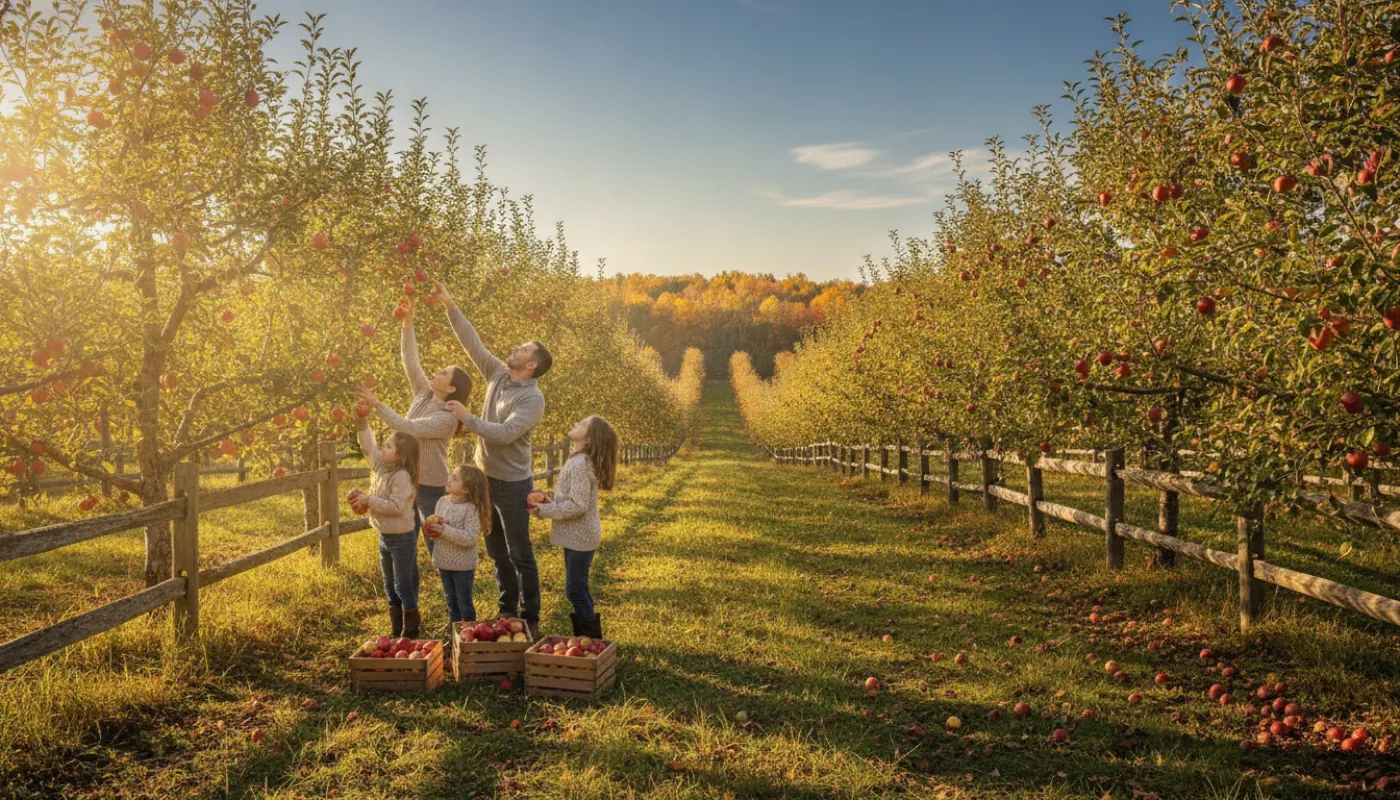
You arrive at the orchard parking area and walk toward the main barn or stand. A staff member will collect your picking fee, ask which varieties you want, and may assign you to a section. Some orchards send you solo into the rows; others do a quick group orientation on ladder safety and picking technique. This matters: you'll see people yanking apples off branches (damages the tree), dropping fruit into buckets from waist height (bruises the apples), and picking unripe fruit (wastes your money and time).
The right way: cup the apple in your hand, tip it slightly toward the branch it's attached to, and gently rotate. A ripe apple comes away in one smooth motion. If you're yanking, it's not ripe. Don't pick it. You're paying by weight or volume, so quality matters more than quantity. The orchard profits if you come back; it loses if you go home with hard, sour fruit.
Once you're in the rows, it's methodical work. You move along each tree, assessing which apples have color and hang loosely. Red develops with sunlight, so the brightest fruit hangs on the sun-exposed side and the tops of the tree, while shaded interior apples stay greener. Fill your bucket slowly; rushing leads to dropped apples and a sore back. Most families spend two to three hours in the orchard. That feels like a long time until you get home and realize you picked forty pounds, most of which you'll actually eat.
When you've had enough, head to the checkout station. Staff weigh your apples, ring you up, and often pack them in paper bags or boxes. Ask about storage tips for the variety you picked, some orchards have harvest advice specific to what's ripe that week.
Storing and Using Your Harvest
The apples you pick will not stay fresh forever. Eaten within two weeks, they're crisp and firm. Eaten within a month, they're softer but still good. Eaten after two months, they're candidates for sauce or baking, not fresh snacking. That's not a failure, it's a reality that should shape how much you pick. Most families pick for the immediate season (the rest of September and October), not for an entire year of storage.
If you want to stretch your harvest, refrigeration is the only low-effort option. Apples stored in a cool basement or a root cellar keep longer than those at room temperature, but unless you have either, your fridge is where they'll stay fresh longest, up to two months in the crisper drawer, separate from other ethylene-producing fruits. Don't wash them until you're ready to eat them; moisture promotes rot.
Beyond fresh eating, your options are simple: applesauce, cider, and baked goods. You don't need recipes for the first two, plenty of orchard websites and county extension offices offer foolproof instructions. If you're not a baker or preserver, commit to eating them fresh. Pick sixty pounds and you'll use it. Pick a hundred pounds and you'll be grating apples into your coffee by December.
Many u-pick orchards also sell cider, frozen apples, or finished products like pie filling. If storage anxiety hits halfway through the season, buy these instead of picking more. The goal is a tradition you repeat, not an overwhelmed freezer and guilt about wasted apples.