U-pick strawberry farms are a staple of spring agritourism, drawing families and home canners from hundreds of miles when the season opens. Unlike fall's apple-picking spectacle, strawberry season hits hard and fast, sometimes just four to six weeks, which means timing matters. The reward justifies the urgency: fresh, sun-ripened berries picked at peak ripeness carry a flavor store-bought fruit can't match, and you're supporting a working farm that depends on seasonal traffic. This guide walks you through regional picking windows, what to actually pack so you don't melt in a field, and how to find farms that care about their visitors, not just volume.
Peak Strawberry Season by State
Strawberry picking windows shift dramatically across North America, which is why "strawberry picking near me" searches spike on different schedules depending on where you live. In southern states like Florida and parts of Texas, the season runs roughly December through April and peaks in February and March, when the best u-pick farms can fill to capacity by mid-morning. California's strawberries are grown on the coast, not inland, the Watsonville–Salinas district on the Central Coast plus Santa Maria and Oxnard farther south, which stretches picking from spring well into summer (and nearly year-round statewide), with April through June the most reliable u-pick window. The Pacific Northwest (Washington, Oregon) follows in June into early July, while northern states like Michigan, New York, and Wisconsin don't open for picking until late May through mid-June.
A few farms in cooler mountain microclimates manage to stay open into early July, but expect thinning harvests and vine stress after mid-June. Knowing your region's window is half the battle. Many farms post opening dates on social media or their websites only a few weeks in advance, so follow them starting in March if you're planning a spring outing. Some farms open for pre-orders or pick-ahead clubs that let you reserve a specific time slot, which guarantees availability and lets the farm manage labor more efficiently. Don't call a farm on opening day expecting to walk in and pick: the lines form hours before gates open, and once they hit capacity, staff lock entry to protect the remaining vines and keep the experience safe for those already picking.
What to Bring and How to Pick
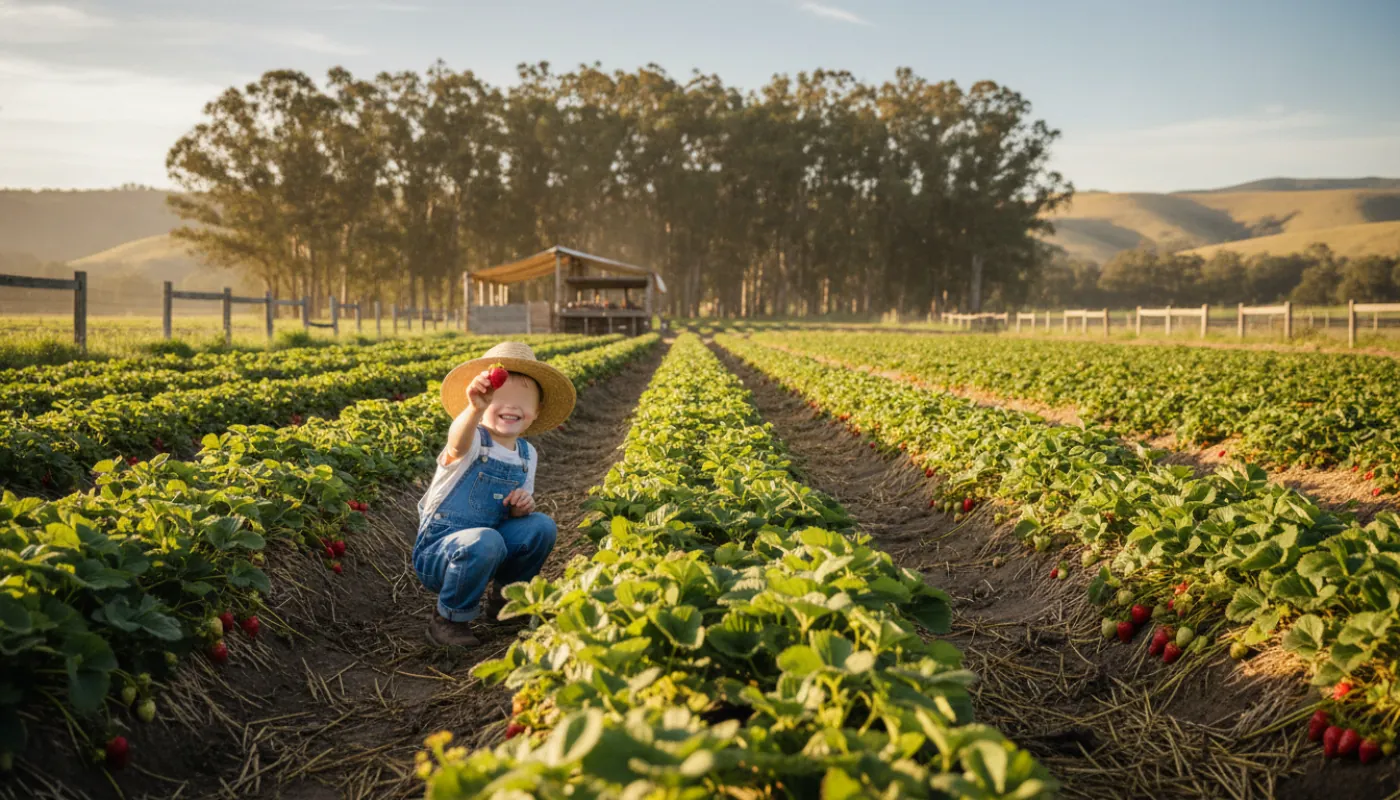
Arrive with the right gear and you'll pick three times as fast as a first-timer and leave far less frustrated. Bring a wide, shallow container, the farm usually provides flats or baskets, but confirm beforehand because some require you to supply your own. Never use a tall, narrow bucket; the weight crushes berries at the bottom. Wear long sleeves and pants if you can tolerate the heat; strawberry plants are low-growing vines and the scratchy, prickly leaf foliage can irritate unprotected skin over a long picking session. Closed-toe shoes with ankle support are non-negotiable because you'll spend hours crouching or bending, and the ground is often muddy even days after rain.
A sunhat, sunscreen, and at least two liters of water per person are mandatory. Strawberry fields offer no shade, and dehydration sneaks up on families caught up in the picking rhythm. Some farms have covered pavilions or trees at the entrance, but the actual rows are exposed. Bring a small towel to wipe sweat and berry juice from your hands, sticky hands make picking harder and slower. When selecting berries, only pick those uniformly red from the stem down; any white or green at the base won't ripen further once picked. Gently separate the stem from the plant rather than yanking, and set each berry stem-up in your basket so the weight doesn't crush those underneath. Rushing leads to bruised fruit and wasted money, which defeats the purpose of paying to pick.
Choosing the Right Farm
Not all u-pick farms are created equal, and the difference between a well-run operation and a cash-grab matters immediately. A well-managed farm maintains consistent ripeness across its fields, manages row spacing so you're not stooping to agonizing heights, and respects its pickers' experience and safety. Before committing, read recent Google and farm-specific reviews, particularly ones from the current season, last year's stellar review might be outdated if the farm changed ownership or cut costs. Check whether the farm charges per pound or per container; per-container pricing incentivizes picking speed over care, while per-pound pricing tends to correlate with farms that prioritize quality.
Visit farms that rotate their fields and have active pest management programs. If you arrive and the rows look sparse, diseased, or picked over, that's a red flag. A reputable farm pulls and replants sections to maintain consistent yields and berry quality throughout the season. Ask about variety, most commercial u-pick farms grow relatively few varieties for consistency, but some feature early-season Albion or late-season Chandler alongside the standard Camarosa or Seascape. Some farms offer additional amenities like fresh-baked pie, jam-making workshops, or farm-stand access, which can add value if they align with your goals. However, the core experience lives or dies on the quality and availability of the berries themselves. Don't be swayed by a nice café if the picking rows look neglected.
Making the Most of Your Visit
Plan to spend two to three hours picking, depending on how many berries you want and your comfort with repetitive motion. Most families fill one or two flats, about fifteen to twenty pounds, in that timeframe, enough for eating fresh, freezing, and canning. Start early and aim to arrive within the first hour of opening because mid-afternoon heat exhausts both you and the vines, and the best berries are typically picked over by mid-morning. Bring snacks and a cooler; the farm's stand prices are marked up significantly, and you'll pick faster and longer with energy reserves.
If you're planning to preserve your harvest, understand that u-pick berries peak for jam and freeze texture within twenty-four hours of picking. Don't assume you can go home and process them next week, the window is real. Freeze them on a tray then bag them, or process jam the same day if you're experienced. Some farms sell canning-supply kits or partner with local canners, so ask when you arrive. Share the experience with others if possible, picking is tedious solo but meditative in a group. Many farms see multi-generational families, homeschool groups, and friend networks showing up together, which transforms the outing from a chore into an event worth repeating every spring.