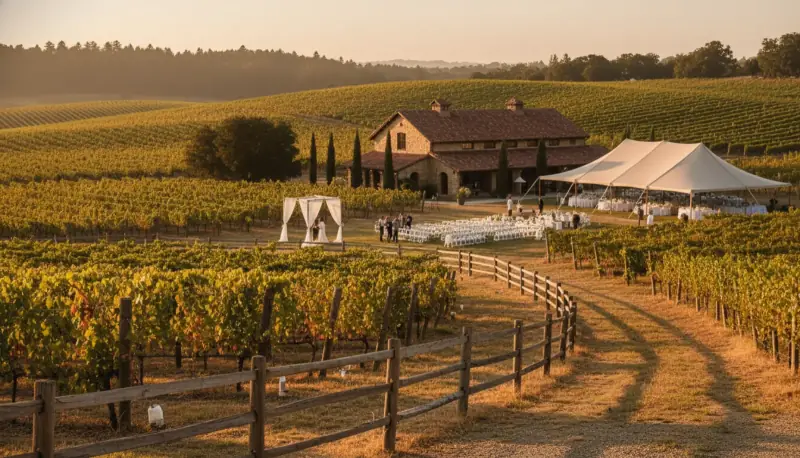
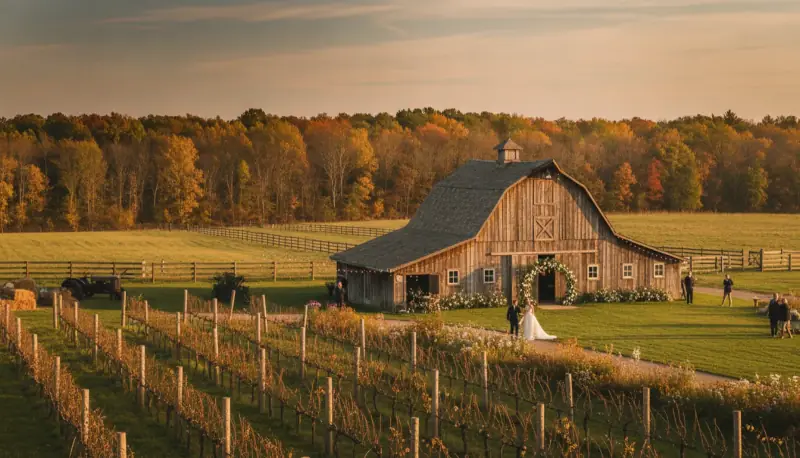
A farm wedding with guest lodging transforms a single-day event into a full weekend celebration. When your ceremony and reception site offers rooms, cabins, or comfortable on-property accommodations, you eliminate the logistics headache of coordinating multiple hotels for out-of-town guests, and you create space for genuine connection. Guests arrive Friday evening, settle into the quiet countryside, share breakfast the next morning, and leave Sunday relaxed rather than rushed. This model works because working farms and vineyard estates have the land and infrastructure to support it: historic barns for events, guest houses for comfort, and grounds that feel less like a venue rental and more like a family homestead. The weekend becomes seamless, your guests stay longer, and the memories stick deeper.
Why On-Site Lodging Changes Everything
Traditional wedding planning splits logistics between two vendors: ceremony and reception site, then separate hotel bookings. Guests arrive an hour before the ceremony, rush through cocktails, and disappear to hotels across town. Adding on-site lodging collapses that split. Everyone stays in the same place, on the same schedule, from Friday check-in through Sunday morning coffee.
This continuity reshapes the guest experience. People sleep after the reception instead of driving tired on unfamiliar roads. They wake on the farm, eat breakfast with other guests, and unwind Saturday morning before departing in the afternoon. The wedding stops being a single event and becomes a weekend, the kind of gathering people still talk about five years later. Families with children benefit most: kids play on acres of land while parents relax. Long-distance guests justify the travel cost across multiple days instead of burning vacation for 36 hours. And for you, the couple, having guests sleep on-property means the celebration genuinely ends when you close the barn doors Sunday, not when people scatter to their cars.
The venue operator benefits too. Farm lodging operates year-round; a single wedding weekend can run the guest house full, tying multiple revenue streams together. That economic model makes operators invest more in guest comfort, meal options, and grounds maintenance than they might for a one-event-per-month ceremony venue.
What On-Site Lodging Actually Looks Like
"On-site lodging" ranges from finished guest houses to glamping setups, and venue descriptions sometimes blur the line between on-property and nearby. Get specific when asking.
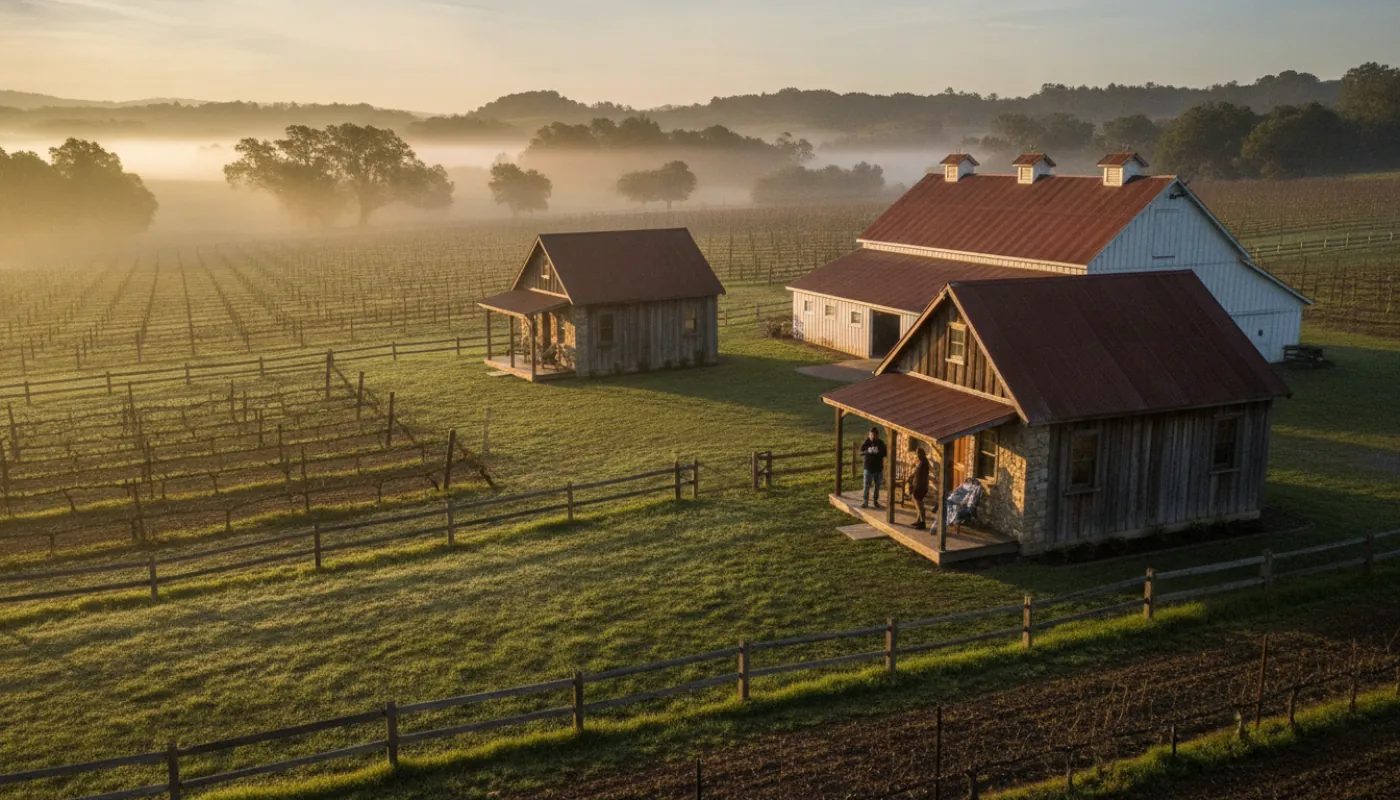
Full guest houses are the luxury end: standalone homes on farm property, with private kitchens, bathrooms, and sleeping capacity for 4–12 people. You book the main barn for ceremony and reception, guests split into the guest house or multiple cottages, and everyone wakes up together. These venues pitch themselves as destination weddings. Expect premium pricing, but also turnkey service and professional hospitality.
Barn lofts are common at mid-range farm venues. The barn itself sleeps 30–50 in a converted hayloft with bunk-style or platform beds. It's rustic, photo-friendly, and creates forced togetherness, some guests love this; some don't. Bathrooms are often communal, and breakfast is catered in the barn the next morning.
Glamping cabins, yurts, or shepherd's huts add warmth to farm venues that don't have finished structures. A few cabins scattered across the property give groups privacy without requiring full guest houses. They're trendy, Instagram-friendly, and cost less to operate than renovated farmhouses.
Finally, many farms partner with nearby hotels or bed-and-breakfasts for overflow lodging. If the venue lists "on-site and nearby," press for details: is the B&B within walking distance, does the venue shuttle guests, or does everyone drive separately? That gap changes the vibe significantly.
The Hidden Costs Beyond the Room Rate
A farm wedding venue quotes you $8,000 for the barn and $250 per person per night for lodging. That's the advertised price, now build the full picture.
Meal plans typically aren't optional. Lodging almost always bundles breakfast the morning after the wedding; many venues require dinner the night before and/or a Saturday lunch. Those extras add $30–50 per person per meal. If you have 80 guests and require two nights, that's an additional $4,800–6,400 in food costs, separate from your catering invoice for the reception itself. Read the fine print before you sign.
Staffing and utilities follow. Overnight lodging means someone staffs check-in, manages keys, responds to 2 a.m. requests, and handles checkout. Some venues build that into the room rate; others charge a "lodging management" fee per night. Expect $500–1,500 depending on occupancy and venue size.
Alcohol licensing shifts too. If you're providing beer and wine at the reception, check whether the farm is licensed to serve and whether overnight guests can bring their own bottles to cabins. Some farms are dry properties. Clarify this before signing a contract.
Finally, consider guest waivers and liability. Farms with lodging sometimes require guests sign release forms if there are hot tubs, fireplaces, animals on the property, or natural hazards. That's reasonable, but unexpected paperwork can sour the experience if not communicated upfront.
Run the full number, not just the room rate, before you budget. Lodging-inclusive weddings are pricier, but the surprise sticker shock comes from forgetting the meal bundle and staff fees.
How to Vet a Farm Wedding Venue
Once you find a venue that offers lodging, inspection is non-negotiable. Photos lie. A "cozy cabin" can mean inadequate heating; a "spacious guest house" might have one bathroom for ten people.
Start with the physical walk-through. Visit the property in the season you plan to marry. Spring meadows look different in August heat, and winter visits reveal whether the cabin heating actually works. Walk every guest accommodation: the barn loft, the cottages, the guest house. Check water pressure in the showers, count outlets, look for mold or damp. Test the WiFi range from the rooms. Ask the operator to show you the guest check-in process and the breakfast setup. Is breakfast a buffet in the barn or room service? Who handles dietary restrictions?
Talk to couples who've married there. Ask the venue for recent references and actually call them. Specifically ask: "Did guests feel comfortable sleeping here? Any complaints about noise, temperature, or amenities?" and "Did the lodging timeline actually work as promised?"
Press on the practical details. What's the guest capacity? Are the rooms distributed across multiple buildings or concentrated? How many shared bathrooms exist if it's bunk-style lodging? What's the cell service? Is there a staffed front desk 24/7 or do guests hunt down the owner at 11 p.m. with a problem?
Finally, clarify the cancellation and weather policy. Lodging contracts often have stricter terms than ceremony-only venues. If a guest backs out last-minute, who eats that cost? If the forecast is bad but the ceremony proceeds, do guests still pay for lodging? Get it in writing before you commit.
Making the Weekend Schedule Work
The power of a lodging-inclusive wedding is the schedule flexibility. Use it intentionally.
Friday arrival and dinner is standard if you're bringing guests from distance. Have the venue host a casual dinner (nothing fancy, just fed), so guests arrive, settle in, and eat without driving into town. This costs $20–30 per person and creates momentum toward the main event.
Saturday morning breakfast should run from 7 a.m. to 10 a.m., giving early risers and late sleepers both options. Keep it simple: coffee, pastries, fruit, eggs. A casual group breakfast in the barn or a pavilion sets a relaxed tone before the ceremony.
The ceremony often happens mid-afternoon (2–4 p.m.), giving people time to hike, nap, or laze after breakfast. Cocktails and reception follow. Plan for the party to wind down by 10 p.m. farm properties don't have late-night noise permits, and guests staying on-property are tired.
Sunday morning is the keeper. Offer a light second breakfast or a coffee-and-pastry spread, keep it available until 11 a.m., and let guests filter out by noon. Some will linger for a walk or a swim if the property has a pond; others will pack up early. The beauty is the no-rush pace that a lodging-inclusive property affords. This schedule costs more upfront, but it delivers the guest experience that makes the venue model work.