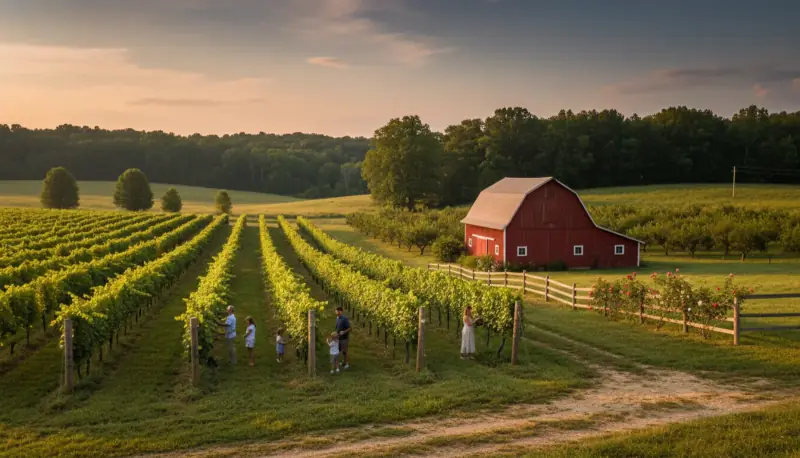
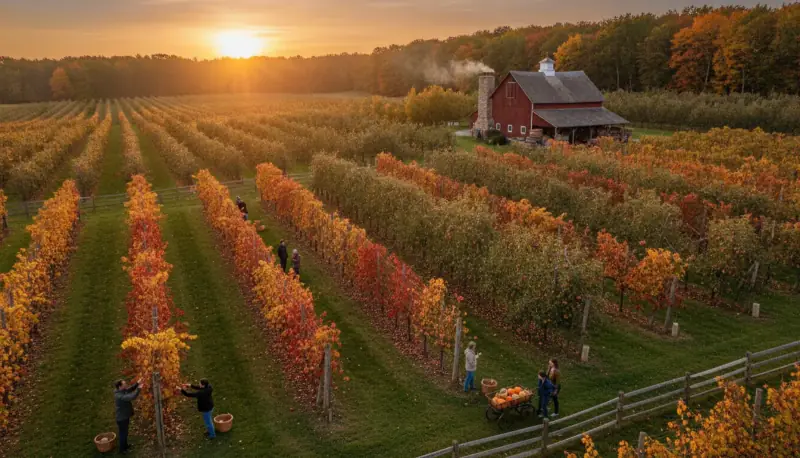
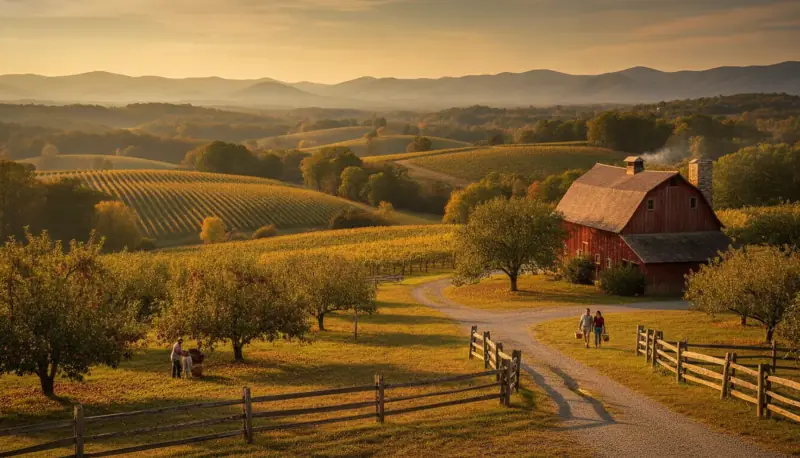
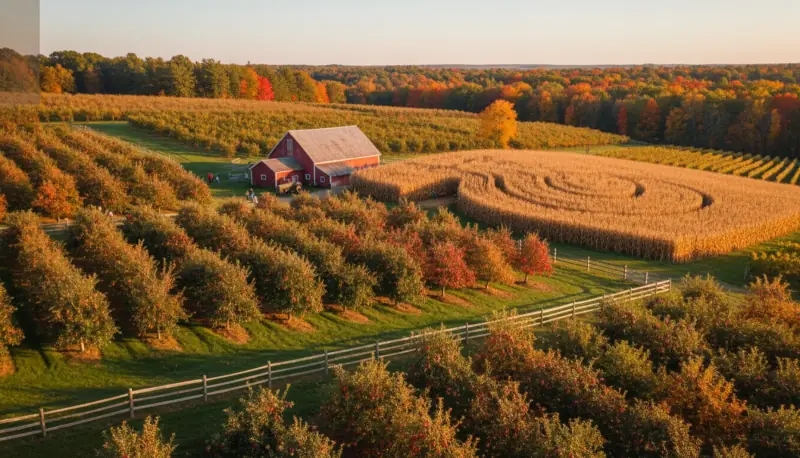
Most people drive into the Hill Country expecting a Napa knockoff and leave realizing it's something else entirely. The Texas Hill Country wineries that line US Highway 290 between Johnson City and Fredericksburg sit on the same land as peach orchards, lavender rows, working farm stands, and cattle operations that predate the first vineyard by a century. That mix is the whole point. A good weekend here isn't a wine crawl with snacks bolted on, it's an agritourism trip where the tasting room is one stop among several, and the seasonal stuff outside the glass often steals the show.
This guide is built around how the region actually rewards a visitor: pace, geography, and timing. Get those right and a two-day trip feels generous. Get them wrong and you'll spend the weekend in the car or stuck behind a tour bus at 11 a.m.
Why the Hill Country Works as a Weekend, Not a Day Trip
The Texas Hill Country AVA is one of the largest designated wine regions in the country, but the part that matters to a visitor is small and dense. The bulk of the tasting rooms cluster along a roughly 30-mile stretch of US 290 west of Austin, with Fredericksburg as the anchor town. You can reach the corridor in about 75 to 90 minutes from Austin and a little over an hour from San Antonio.
The reason it's a weekend and not a day trip comes down to two constraints. First, drinking and driving don't mix, and the wineries are spaced far enough apart that a designated driver or a hired car service is non-negotiable if you want to hit more than two. Second, the farms (orchards, lavender fields, u-pick operations), keep daytime and seasonal hours that rarely overlap neatly with tasting-room schedules. Trying to fold both into one day means doing each badly.
Stay overnight and the math changes. You get a morning for the farms when they're freshest and least crowded, an afternoon for two or three tasting rooms, and an evening in town. The next morning is for whatever you skipped.
Building a Two-Day Hill Country Wine Trail
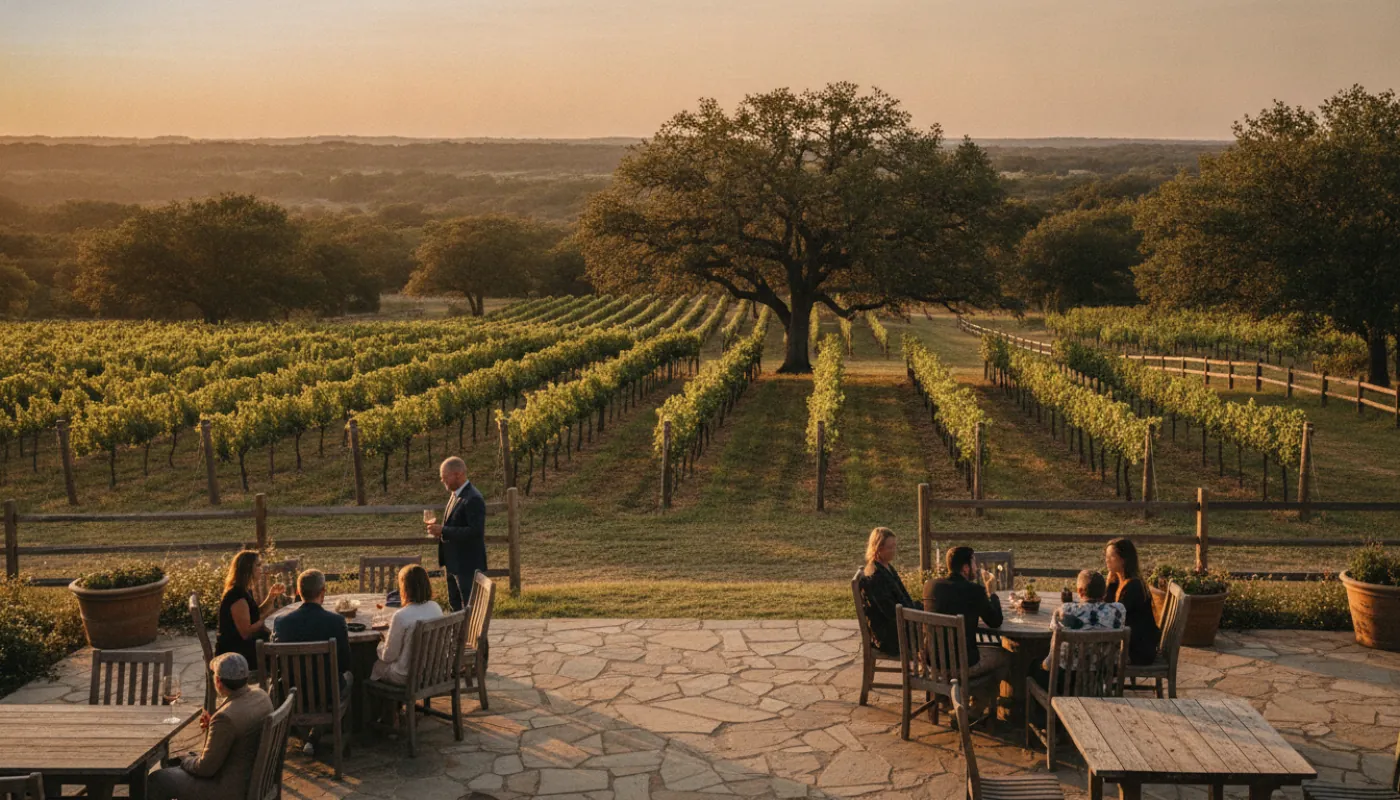
There's no single official "Hill Country wine trail" route you have to follow, the corridor is the route. The skill is sequencing it so you're not backtracking.
Anchor your tastings, don't chase them
Pick three tasting rooms for a full day, four if you started early and have a driver. Beyond that, palate fatigue sets in and you stop noticing what you're drinking. A workable rhythm:
- Late morning: Start at a smaller, family-run operation off the highway. These open earlier, feel less rushed, and the person pouring is often the one who farmed the fruit.
- Midday: Break for lunch, many estates have food trucks or a kitchen, which solves the "drinking on an empty stomach" problem.
- Afternoon: Hit one or two of the larger destination wineries when you have the energy for crowds and bigger pour lists.
Reservations have become the norm rather than the exception, especially on weekends and during peak spring. Book a few in advance and you skip the front-gate scramble. Saturdays draw the heaviest traffic and the most party buses; if your schedule has any flex, a Friday or Sunday is calmer and the staff has more time for you.
Know what's actually in the bottle
Texas grows warm-climate grapes well: Tempranillo, Mourvèdre, Viognier, Tannat, and other Rhône and Iberian varieties tend to outperform the Cabernet-and-Chardonnay expectations people import from California. Worth knowing before you go: not every label on the shelf is estate-grown Texas fruit. Some producers source grapes from the High Plains AVA up near Lubbock, where most of the state's wine grapes are actually grown, and a handful blend in out-of-state juice. None of that is a problem, but if drinking genuinely local matters to you, ask where the fruit came from. Good tasting rooms answer plainly.
Beyond the Glass: Farms, Orchards, and U-Pick
This is where the Hill Country separates itself from a generic wine region, and where the agritourism label earns its keep. The same soils and elevation that suit the vineyards also produce some of the best stone fruit in Texas.
Peaches are the headliner. The Stonewall and Fredericksburg area runs roadside peach stands and u-pick orchards through the summer, with the harvest generally spanning late spring into August depending on the variety and the year's weather. Early-season clingstone fruit gives way to the prized freestone peaches later on. If a stand is selling, the fruit is ripe, these don't ship well, so what you buy at the orchard is better than anything you'll find in a grocery store.
Lavender has become a signature draw, with several farms opening their rows for cutting and offering distillation demonstrations and products. The bloom is concentrated in late spring and early summer; outside that window the fields are green but not purple, so time it if the photos are the goal.
Wildflowers aren't a farm product, but they're part of the agritourism calendar. Bluebonnet season in spring transforms the roadsides and pulls a wave of visitors. Plan for heavier traffic if you come then, and be courteous about where you stop for photos. Stay out of working pastures and off private land.
Rounding out the options across the seasons: u-pick berry patches, farm stands selling honey and jam, goat and sheep dairies with cheese to sample, and the occasional working ranch that opens for tours. A few minutes browsing a regional destinations roundup before you go will tell you what's actually in season the weekend you're traveling, which matters more here than almost anywhere, because the farm calendar is unforgiving. Show up for peaches in October and you've missed the entire point.
Where to Stay: Town Base vs. Farm Stay
Two reasonable strategies, and the right one depends on whether you want convenience or immersion.
A town base in or near Fredericksburg puts you walking distance from restaurants, the main shopping district, and an easy ride to the 290 corridor. It's the low-friction choice, and it's where most first-timers should start. Book early for spring and fall weekends, lodging fills well ahead during peak season and festival weekends.
A farm stay trades convenience for the actual experience of staying on agricultural land: a guesthouse on a working vineyard, a cabin at a lavender farm, a room at a ranch. You wake up in the landscape instead of driving to it, and the hosts usually know exactly which orchard is picking that week. The trade-off is that you'll drive a bit more for dinner. For a couple or a small group who came for the agritourism rather than the nightlife, it's the better memory.
If you operate a farm, orchard, or vineyard in the region and want travelers to find your stand, tastings, or guest accommodations directly, listing your place is straightforward. See how to get started and put your operation on the map alongside the rest of the corridor.
Practical Logistics
The details that make or break the trip:
| Consideration | What to plan for |
|---|---|
| Best months | Spring (wildflowers, lavender starts) and early summer (peaches); fall for harvest and milder crowds |
| Getting around | Designated driver or a hired car/van service, wineries are spread along miles of highway |
| Reservations | Book tasting rooms ahead for weekends and peak season; many require it |
| Crowds | Saturdays and bluebonnet season are busiest; Fri/Sun and shoulder months are calmer |
| Cash on hand | Roadside farm stands and small orchards may be cash-only |
| Heat | Summer is hot, front-load outdoor farm visits to the morning |
A short pre-trip checklist:
- Confirm which farms and orchards are in season and open the weekend you're going.
- Reserve two to three tastings; leave room for one walk-in discovery.
- Line up a driver or car service before you arrive, not the morning of.
- Bring a cooler: peaches, cheese, and a few bottles all travel better cold.
- Pack for sun and uneven ground; orchards and lavender rows aren't paved.
The Hill Country rewards visitors who treat it as farm country first and wine country second. The tasting rooms are excellent, but the orchard you stumble onto on a back road, the lavender you cut yourself, and the peaches you eat over the sink that night are what bring people back. Build the weekend around the land and the wine takes care of itself.