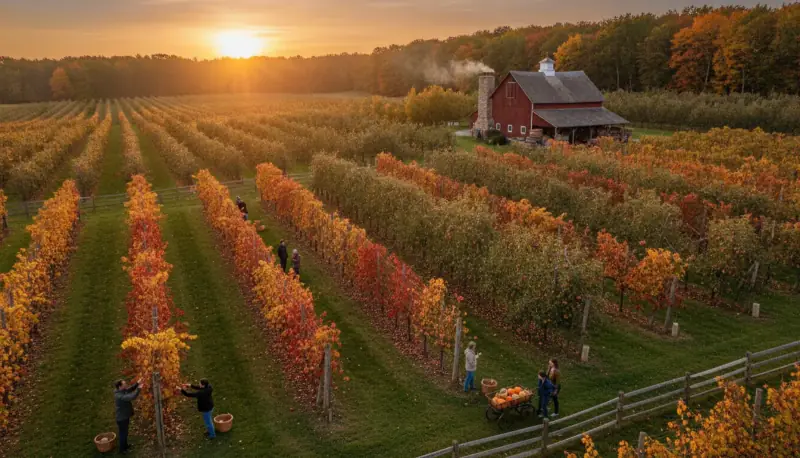
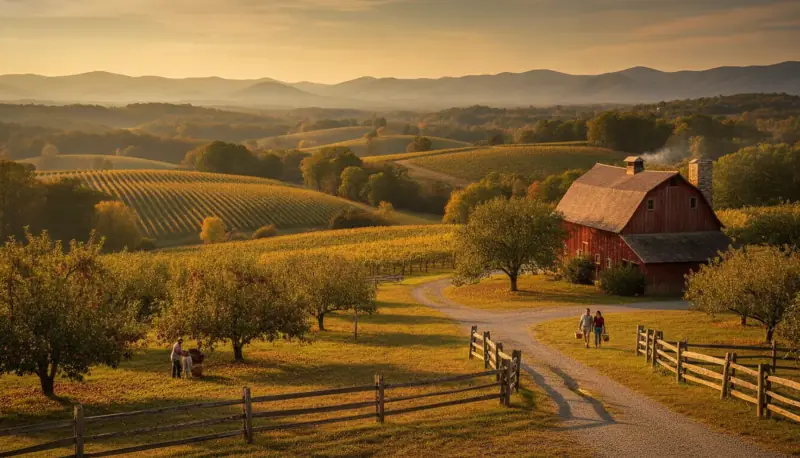
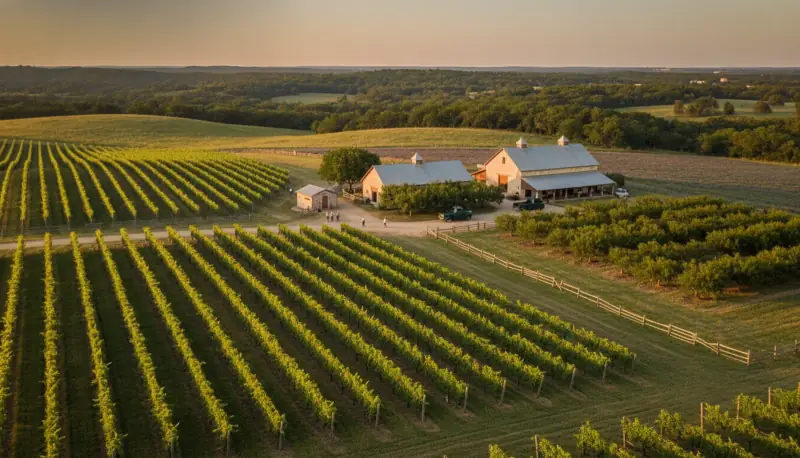
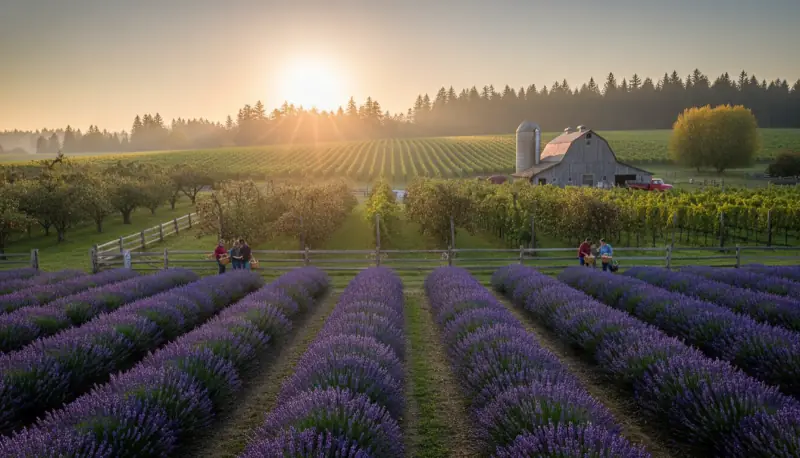
Every September, the same thing happens: the maples start to turn, someone posts a photo of a cider donut, and suddenly half of Boston is driving north looking for a hayride. New England fall farms are not a secret. But the difference between a great farm day and a frustrating one comes down to timing, geography, and knowing what a working orchard actually offers versus what's been built for the camera.
This guide is for people who want the real thing: a u-pick row that hasn't been stripped bare by noon, cider pressed on-site, a corn maze that takes more than four minutes to finish. Here's how the season actually works and how to plan around it.
When the Season Actually Peaks
The mistake most first-timers make is treating "fall" as one block of time. It isn't. The apple harvest and the foliage peak are two different clocks, and they only partly overlap.
Apples come in waves. Early varieties like McIntosh and Gala are ready in September across most of southern New England. The storage and dessert apples people actually drive for (Honeycrisp, Cortland, Macoun, and later Fuji and Northern Spy), fill in from late September through mid-October. By the last week of October, most orchards are picking their final rows and the selection thins fast.
Foliage runs north to south and high to low. The northern mountains of Vermont, New Hampshire, and Maine typically turn first, late September into early October, while the Connecticut and Rhode Island coast can hold color into the first week of November. That means a trip timed for peak leaves in the White Mountains is often a week or two early for the best apple selection in the valleys below.
If you want both at once, the sweet spot in a typical year is the first two weeks of October in central New England, southern Vermont and New Hampshire, central Massachusetts. You get color on the hills and full bins in the orchard.
A few practical notes on timing:
- Go on a weekday if you possibly can. The crowds, the parking, and the picked-over rows are all weekend problems.
- Call ahead or check the farm's "what's ready" page. Good orchards update which blocks are open for picking, because they rotate to let trees recover.
- The morning belongs to the serious pickers. By early afternoon on a Saturday, the easy-to-reach fruit near the entrance is gone.
For verified open farms by state, the farm directory is the fastest way to confirm a place is actually operating this season before you commit to the drive.
Vermont Apple Picking and Cider Country
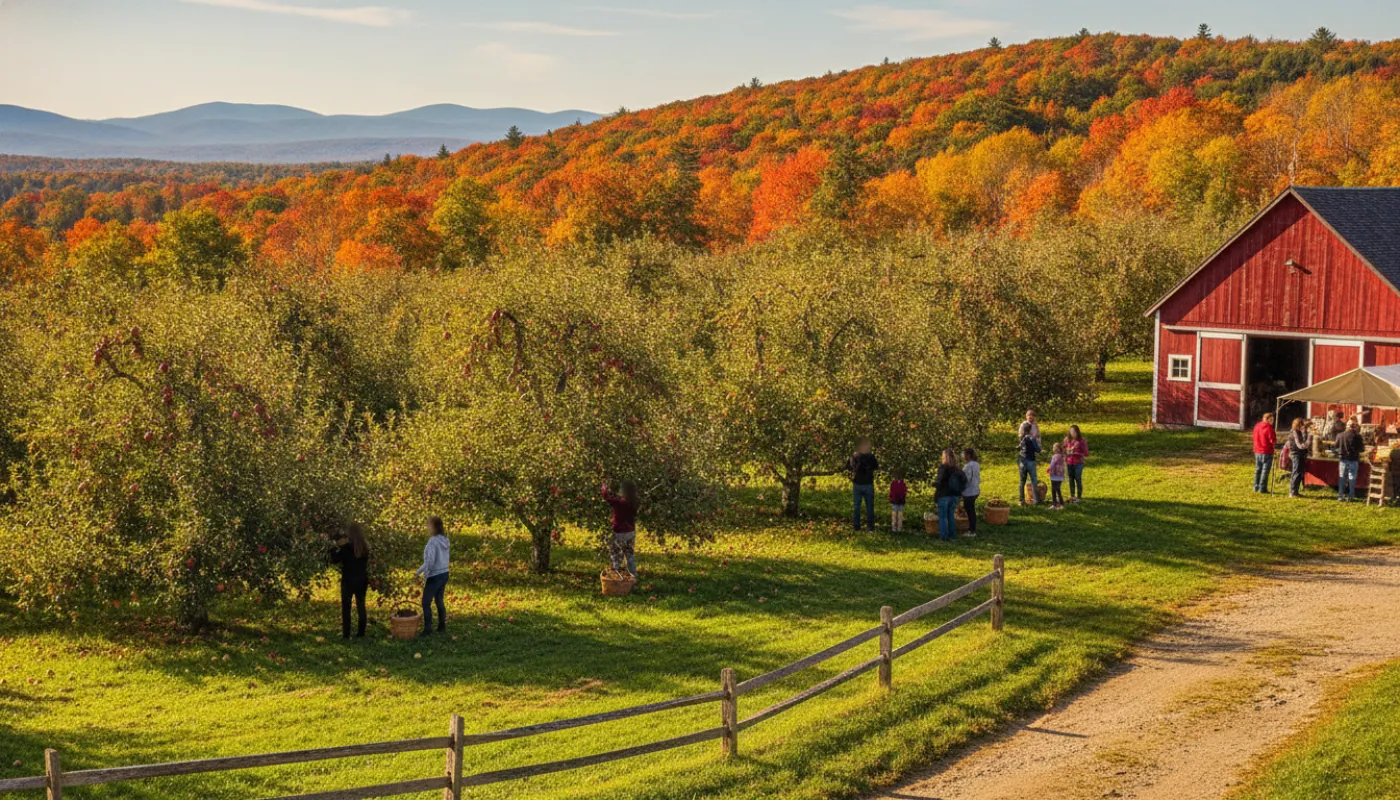
Vermont is the postcard, and for once the postcard is right. The combination of mountain backdrops, smaller family orchards, and a serious cider culture makes it the standout for a fall farm trip, especially if you care about what's in the cup as much as what's in the bag.
There are two very different drinks both called "cider," and the distinction matters when you're planning:
- Sweet cider is the fresh-pressed, unfiltered, non-alcoholic juice. This is what you want with a donut. The best of it is pressed on-site from the farm's own seconds.
- Hard cider is fermented and alcoholic, and Vermont has become one of the most interesting hard cider regions in the country. Many orchards now run a tasting room alongside the u-pick operation.
If a fermented tasting is part of your plan, check whether the farm holds the cider on the Vineyards & Breweries side of its operation, plenty of Vermont orchards now do both, and the licensing means tasting hours can differ from picking hours.
Vermont apple picking also tends to come with the fewest gimmicks. You'll find hayrides and farm stores, but the focus stays on the fruit and the view. For a trip that prioritizes scenery and quality over a packed activity roster, this is where I'd point you first.
New Hampshire Orchards and the Maze Belt
New Hampshire orchards punch above their weight, and the state is the place to go if your group includes kids who need more than a quiet row of trees. The cluster of farms in the southern part of the state, within reasonable reach of both Boston and the Lakes Region, leans into the full agritourism experience: pick-your-own, pressed cider, pumpkins, animals, and some of the most elaborate corn mazes in the Northeast.
What separates a good orchard from a tourist trap
After enough fall trips, the tells become obvious. A working New Hampshire orchard that happens to welcome visitors feels different from a place that's primarily an event venue with a few decorative trees out front.
Signs you've found the real thing:
- The farm store sells its own apples and cider, not crates trucked in from elsewhere.
- Pricing is by the bag or by the pound, with clear signage about which blocks are open.
- The staff can tell you what's ripe and what's coming without checking a laminated card.
- Parking and crowd flow are managed on peak weekends, a sign they do this every year, not a place caught off guard.
Corn mazes worth the admission
A real corn maze is cut into a working field and takes a genuine half hour or more to navigate. The good ones design a new pattern every year and run flashlight or "haunted" nights once October gets going. If you're traveling with older kids or teenagers, the maze is often the make-or-break attraction, so it's worth confirming the acreage and whether evening sessions are running before you build the day around it.
Building the Trip: A Practical Itinerary Framework
You don't need a rigid schedule, but you do need a shape. The farms that are worth visiting cluster in valleys and along scenic routes, and the drive between regions eats more time than the map suggests once the leaf-peeper traffic shows up.
Here's a simple framework for a weekend:
| Day part | Best use | Why |
|---|---|---|
| Early morning | U-pick at your main orchard | Best fruit, smallest crowds, soft light for photos |
| Midday | Cider, donuts, farm store, lunch | Lines are longest now, let someone else fight them while you eat |
| Afternoon | Corn maze, hayride, pumpkins | Activity-heavy stops handle crowds better than picking does |
| Late day | Scenic drive to the next town | Foliage looks best in low afternoon sun |
A few rules that keep the day from unraveling:
- Anchor on one serious orchard, not three. Hopping between farms means re-parking, re-paying, and burning daylight in the car.
- Bring cash and a cooler. Smaller farms sometimes run cash-only stands, and fresh cider needs to stay cold on a warm afternoon.
- Layer your clothes. A 40-degree morning in the hills becomes a 65-degree afternoon, and orchard mud doesn't care about your sneakers.
- Check the weather the night before. Many u-pick blocks close after heavy rain to protect the trees and the ground, and a wet maze is miserable.
If you're scouting a region you don't know, filtering the directory by state and category beats trusting a generic "top 10" list, those roundups go stale, and a farm that closed or stopped offering u-pick is worse than no recommendation at all.
What Fall Farms Want You to Know
A working farm is not an amusement park, and the visitor experience reflects that. A little awareness goes a long way toward being a guest a farm is glad to see.
Pick gently, twist the apple up and off the branch rather than yanking, which can strip next year's bud. Stay on the rows and blocks marked open; the closed ones are recovering or reserved. Keep dogs out of picking areas unless a farm explicitly allows them, because health rules around food crops are strict. And if you're there for the photos, ask before staging anything elaborate; the farm is a business first and a backdrop second.
This is also a good moment to remember that the whole season runs on thin margins and a short window. A farm has roughly six weeks to earn a meaningful share of its annual income, and bad weather can erase a weekend. Spending money at the farm store, tipping the cider stand, and coming back on a quiet weekday are the things that keep these places open.
The Bottom Line
New England fall farms reward planning more than spontaneity. Match your dates to both the apple harvest and the foliage instead of assuming "October" covers it. Go north and high for early color, central for the overlap, and south or coastal if you're running late in the season. Anchor on one real working orchard, treat the cider and the maze as the supporting cast, and travel on a weekday whenever you can.
If you run a farm, orchard, or cider operation and want travelers finding you instead of a stale listicle, you can add your farm to the directory and keep your seasonal hours and u-pick status current, which is exactly what the careful planners are checking before they drive.