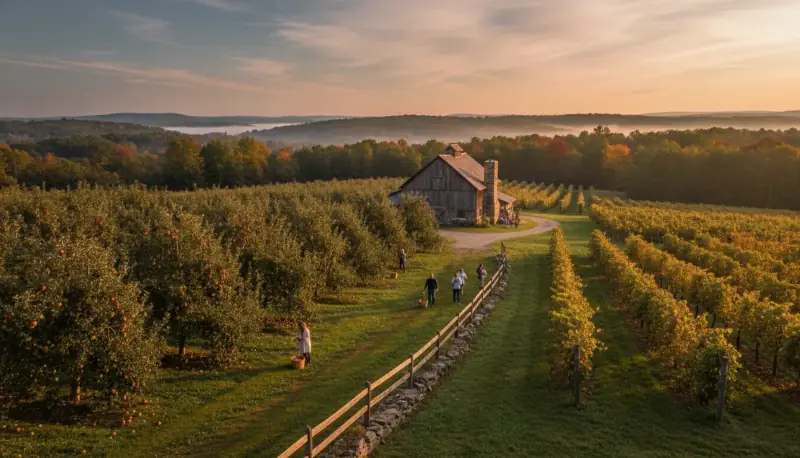
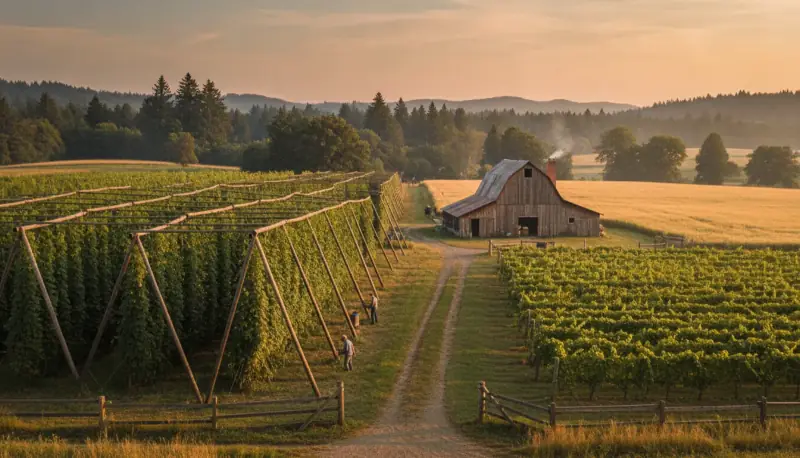
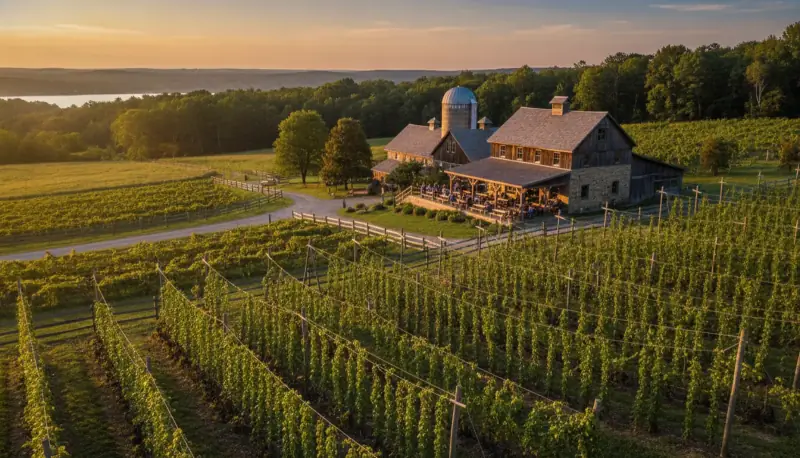
The Finger Lakes wine region has quietly become one of the East Coast's most compelling wine destinations. If you're running a farm stay, agritourism operation, or considering adding a vineyard to your property, understanding the Finger Lakes ecosystem, and where your guests are headed for wine, is essential. This isn't marketing copy; it's a grounded look at what makes the region work, how tasting rooms operate, and how wine tourism intersects with broader farm business models in central New York.
Seneca Lake: Scale, Riesling, and Serious Operators
Seneca Lake is the Finger Lakes' backbone. It's the deepest of the Finger Lakes, and that depth stores enough heat to moderate the local climate, it barely freezes in winter, which extends the growing season and lets cool-climate varieties, especially Riesling, develop crisp acids and mineral complexity. If you've stayed at a Finger Lakes farm venue and spent an evening at a Seneca tasting room, you've probably tasted that terroir directly.
The lake's east shore is densely developed with tasting rooms, and for good reason: the slope aspect and glacial soils there produce some of the region's most consistent fruit. Most Seneca Lake wineries focus on white wines, though many have expanded into Pinot Noir and other reds to appeal to a wider visitor base. For an operator running a farm stay or agritourism venue, this matters because it shapes your guest mix. Wine tourists on Seneca tend to be slightly older, more knowledgeable (Riesling draws serious drinkers), and often repeat visitors who've built a relationship with a specific winery over years.
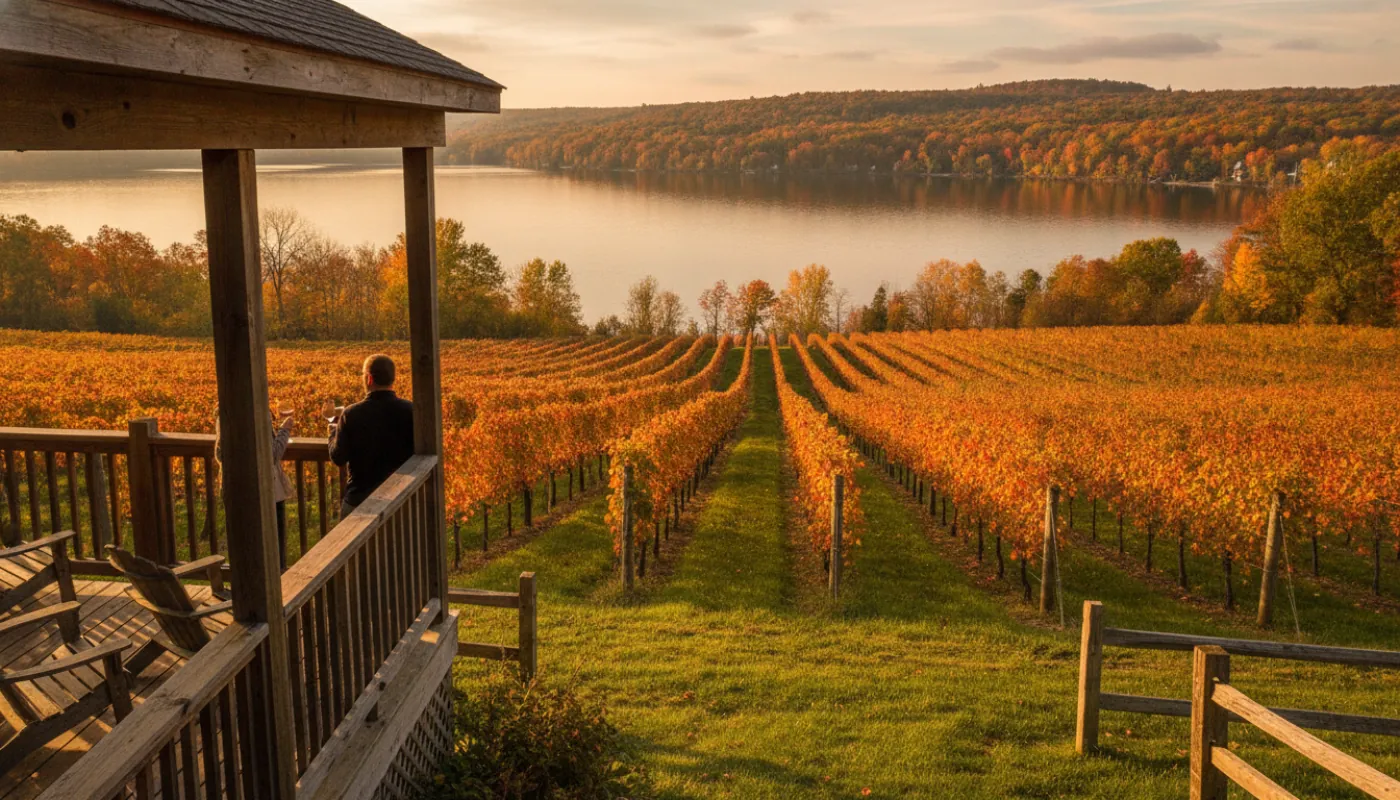
The tasting-room experience on Seneca is relatively standardized: most charge a fee (typically $12–18 for a flight), waive it if you buy a bottle, and pour by the glass. Staffing models vary, some operate family-only (which limits hours), others hire seasonal staff (April–October mostly). If you're considering opening your own tasting room or expanding into wine tourism at your property, Seneca's operators are the ones to learn from: how many staff you need per guest, how to manage the Saturday crowd surge, what your POS and licensing overhead actually costs.
Cayuga Lake: Diversity, Accessibility, and Volume
Cayuga Lake runs parallel to Seneca, slightly warmer, with a more diverse vineyard portfolio. If Seneca is the purist's lake, Cayuga is the discoverer's. You'll find Riesling, certainly, but also Finger Lakes specialties like Cayuga White (a hybrid bred locally), Gewürztraminer, and more approachable fruit-forward styles. Many Cayuga tasting rooms pour wines under $20, which brings a different visitor profile: younger, less wine-savvy, often stopping by as part of a broader road-trip itinerary rather than a wine-focused pilgrimage.
The Cayuga wine trail sees higher total volume than Seneca because of this positioning. For a farm, brewery, or u-pick operation trying to anchor a broader agritourism day, Cayuga Lake tasting rooms are excellent partner destinations. Your guests can spend a morning at your property and an afternoon wine tasting without feeling like they're choosing, it's all part of the same regional experience.
Cayuga's operators tend to run longer hours and employ year-round staff more often than Seneca's. If you're looking at adding your own wine production to a farm venue, Cayuga's model (simpler wines, higher volume, lower barrier to entry), may be more sustainable than Seneca's more capital-intensive, small-batch approach.
Operating a Tasting Room: Economics and Licensing
If wine tourism is on your roadmap, you should know how tasting-room economics actually work, not what you'd imagine. Most revenue comes from bottle sales, not tasting fees, the fee is a filter and a breakeven on labor, not a profit center. Plan on pouring 4–6 ounces per person per tasting, and assume about 40–50% of tasters will buy a bottle. On a busy Saturday, a single staffer can handle roughly 30–40 tasters in a day; beyond that, you need a second person or you'll have a wait and visitors will leave frustrated.
Licensing is non-trivial, and it's widely misunderstood. A New York farm winery license lets you sell and pour the wine you produce, and, importantly, it also lets you serve other New York State–labeled products on-premise (other NY wineries' wine, plus NY beer, cider, and spirits) with no additional license. You only need a separate on-premises license if you want to serve wine or spirits that aren't New York products, out-of-state or imported. Either way, you'll need local approval (some towns and villages restrict on-premise alcohol service). Budget for a lawyer familiar with New York's ABC law; it's cheaper than a licensing mistake.
Tasting-room design matters more than most farm operators expect. Visitors expect a poured tasting (per glass, in sequence), not a sample-yourself setup. You need a counter where your server can work, shelving to display bottles, a POS that tracks inventory, and a space where people can linger for 10–15 minutes without feeling rushed. If you're considering a tasting-room addition to an existing farm structure, plan on a 150–300 square-foot dedicated space. Outdoor tasting on a farm is romantic but operationally harder (weather, table service, bathroom logistics).
The Visitor Experience: What Guests Expect
Wine tasting at a Finger Lakes winery is a social experience first, educational second, and commercial third. Most visitors spend 20–45 minutes at a tasting room, though repeat guests who know the staff might sit for an hour or more.
Visitors expect knowledgeable staff who can talk about the wine without pretension. The best tasting-room staff in the Finger Lakes strike a balance: they know the winemaking process, can explain why a wine tastes the way it does, but don't make a guest feel ignorant for preferring a sweeter style. If you're building a wine program, hire staff who like talking to people more than wine itself. The wine knowledge comes after.
Pricing is transparent across the region: a five-wine tasting usually runs $15, a six-wine flight $18, and most rooms waive the fee on a bottle purchase. Food pairing (charcuterie, cheese, local crackers) is increasingly expected, especially on a busy day when people stick around. Simple offerings (local cheese from a nearby dairy, bread from a regional bakery), anchor the experience without requiring full food service.
Seasonal Patterns and Booking Strategy
The Finger Lakes wine season has two peaks: fall harvest-adjacent tourism (September–October) and summer leisure (June–August). Fall is higher-volume and higher-intensity: many visitors target harvest, wine-release events, and the visual spectacle of vineyards. Summer is steadier but less concentrated; people come as part of a week-long Finger Lakes vacation or a day-trip from Rochester or Syracuse.
If you're planning a farm stay or agritourism venue near wine country, book your tasting-room recommendations and partnerships before peak season. The best tasting rooms fill afternoon time slots on weekends by mid-September. If you tell a guest "go to the wine trail" without a specific place and time, they'll end up at whoever has an open spot at 4 PM, which may not be your first choice.
Winter (November–April) is quiet. Many tasting rooms reduce hours or close mid-week. Spring (May) is the shoulder: pleasant for visiting, less crowded, good for learning the wine program without the Saturday crush. If you're in the agritourism business, consider threading wine-country visits into your shoulder-season packages: spring farm-stay plus wine-tasting long weekends; late-October leaf-peeping plus harvest celebration.
Sync your own tasting-room calendar with your farm calendar. If you're u-picking or hay-riding in September, send tasting-room traffic in July and August so you're not competing with your own attractions. If you run a farm wedding venue, partner with a Cayuga Lake winery for rehearsal dinners or reception afterparties, they often have outdoor space or private-event capability that complements your venue.
The Finger Lakes wine region isn't new, but it's still refining its identity. The wine is genuinely good, the operators are serious about their craft, and the landscape is beautiful. For farm and agritourism operators, that creates an opportunity: position your property as part of the regional story, not just a pit stop. Your guests want the whole experience: the farm, the vineyard, the lake, the winery, the stay. Build that interlocking itinerary, and they'll return and recommend it to others.