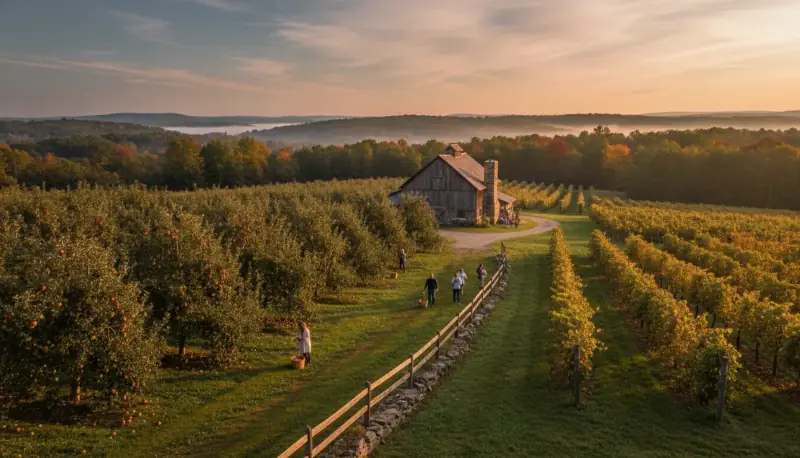
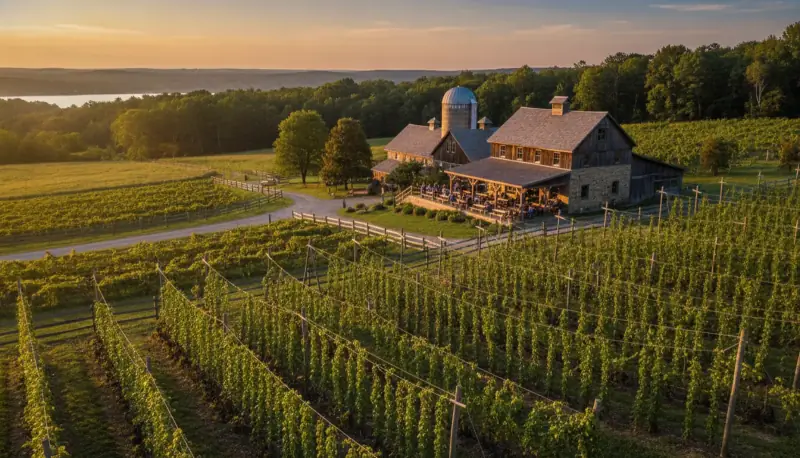
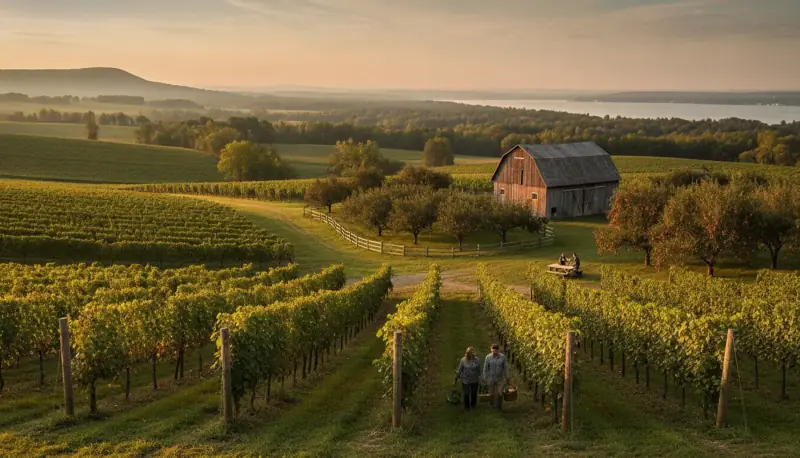
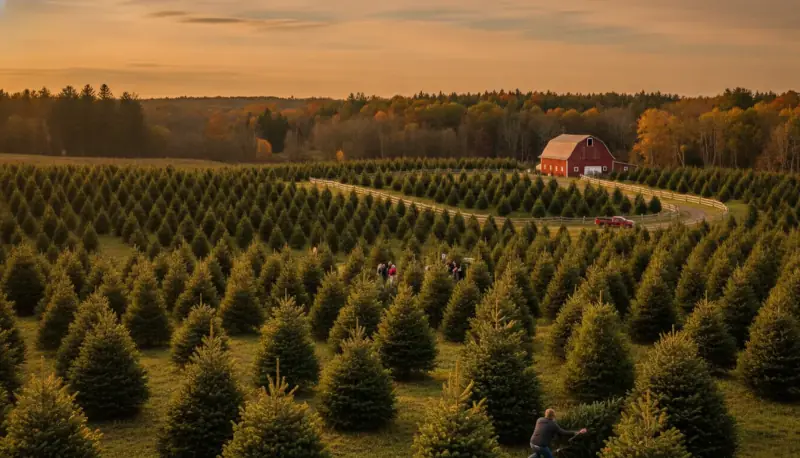
The farm brewery and cidery movement represents a deliberate turn away from industrial brewing toward place-based, ingredient-driven operations. These are not taprooms that happen to sit on land. Estate breweries and cideries actively cultivate hops, heritage grains, or cider apples as part of their core identity, sometimes on hundreds of acres, sometimes on a few. The result is a tighter connection between what grows in the soil and what pours into the glass. For visitors, a farm brewery visit means understanding the full cycle: the fields, the fermentation, the story. For operators, it means control. Growing your own inputs eliminates middlemen, locks in quality, and gives you a narrative that tourists will pay to experience.
Why Breweries and Cideries Are Growing Their Own
The decision to grow your own brewing inputs is economically counterintuitive. Hops demand significant infrastructure, labor, and years to establish. Heritage grains tie you to seasonal harvests and malt processing. Cider apples require mature orchards and precise blending knowledge. None of this makes financial sense if profit margins are your only metric. What changes the calculus is creative control and brand differentiation.
When you own the input, you own the flavor profile. A brewery buying commodity hops is buying standardized products on a supplier's schedule. A farm brewery can experiment with sub-ripe hops for different bittering profiles, dry them on-site for custom results, or blend heritage varieties the commodity market doesn't carry. A cidery growing multiple heirloom apple varieties can create seasonal ciders that taste different year to year based on weather and harvest timing, a vintage approach that retail ciders can't replicate. This control is worth the cost and complexity.
The agritourism angle is equally important. Visitors want to understand where things come from, and a farm brewery can say "the barley in this ale grew in the south field" and show them the actual field. That story is worth a higher pour price and a return visit. The farm setting itself (the views, the outdoor seating, the seasonal rhythm of growth and harvest), becomes part of the product. You're not selling beer or cider. You're selling an experience rooted in land and seasons, which is why farm breweries often operate as destination visits rather than casual drop-by stops.
Hops, Grains, and Fruit: What Farms Actually Grow
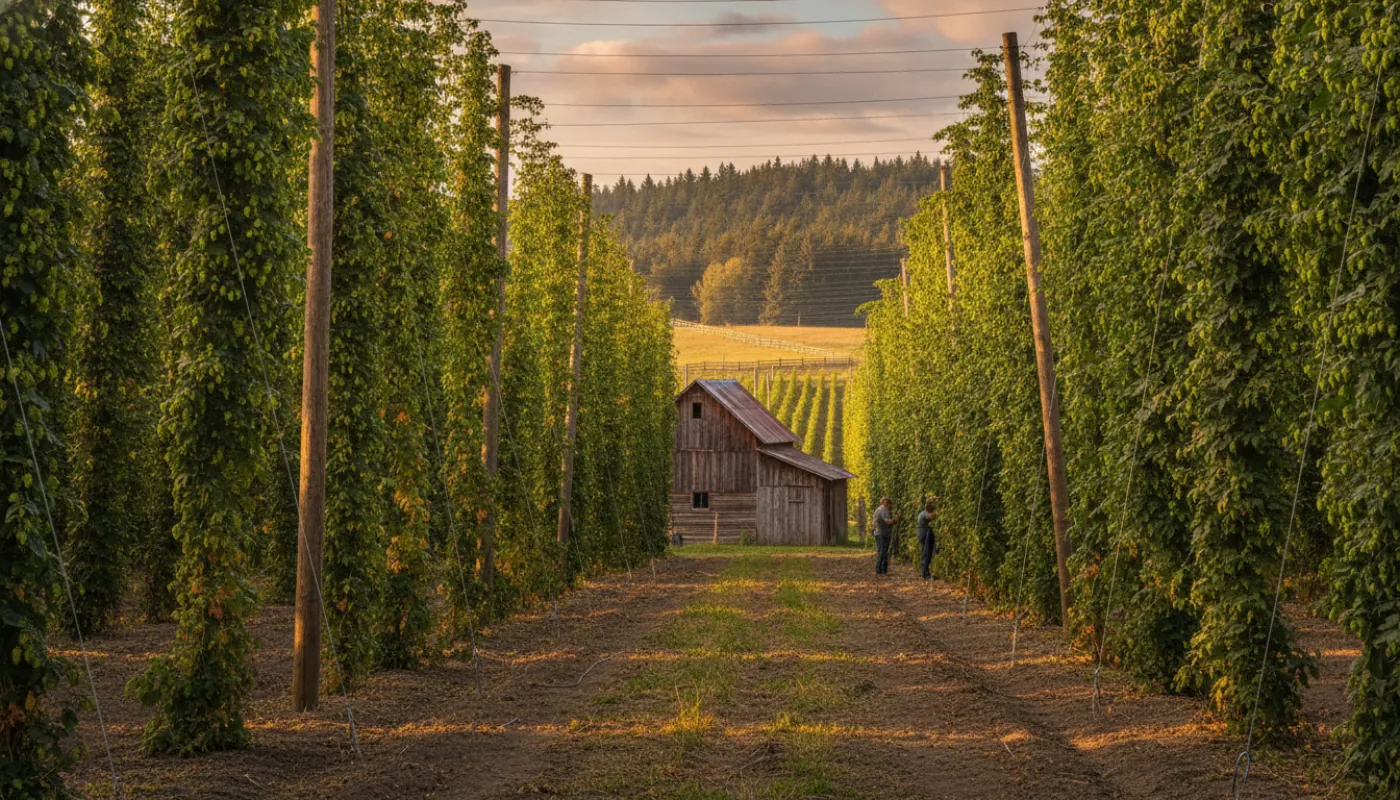
Hops are the most visible choice for farm breweries, especially in regions with a history of hop cultivation: the Pacific Northwest, upstate New York, parts of Colorado. Hop farms typically start at 10–20 acres minimum to make commercial sense, though some smaller operations manage 2–5 acres for on-site brewing. Hops demand trellising infrastructure, careful timing, pest management, and processing equipment (or relationships with hop-brokers). The investment is substantial, but the control is absolute.
Heritage grains are more accessible for smaller operations. A farm can grow a few acres of barley, wheat, rye, or oats, have it malted by a local maltster, and produce grain-to-glass beer with far less infrastructure than hops demand. Some farm breweries partner with regional malthouses rather than malting on-site, keeping capital costs lower while maintaining the story of local grain. This model scales down to single-acre operations for very small breweries, though yields are modest.
Cideries tend to focus on apples: specifically cider apples, which are tart or tannic, not the sweet eating varieties. Building a cider-apple orchard takes 5–7 years before the first commercial harvest, which is why many farm cideries are on older properties or are second-generation operations. A cidery might grow 5–10 acres of multiple heirloom or rare varieties, using the orchard as both production input and tourist attraction. Berries (blackberries, raspberries) are also common for fruit lambics and sours, especially in regions with established berry agriculture. The key difference from casual orchards is commitment: a farm cidery with 20 acres in cider apples is signaling that fermentation is the core business, not a side project.
The Farm Brewery Experience
A visit to a working farm brewery feels fundamentally different from a standard taproom. You're sitting in or near production fields, often with views of what's growing. Spring visits mean watching emergence or early growth. Summer means cultivation and flowering. Fall is harvest, the most active and photogenic season. A cidery in fall might let visitors participate in pressing apples or sorting fruit. A hop farm in late August might offer harvest-day tastings, where you smell fresh hop cones and taste a wet-hop beer brewed the same week. These moments create memory and narrative that you can't replicate in a city taproom, and they're why farm breweries often attract repeat visitors who time their visits to specific seasons.
The secondary benefit is transparency and education. A farm brewery's owner can explain what the soil did that year, how late frost affected the crop, why this harvest's batch tastes different from last year's. Visitors appreciate this candor. You're not getting a standardized product; you're getting a vintage tied to place and weather. A hectare of heirloom cider apples might yield 5,000 bottles one year and 3,000 the next due to frost or drought, and a good cidery owner explains that openly. This authenticity builds trust and turns repeat visits into tradition. You're not buying consistency; you're buying story.
Starting a Farm Brewery or Cidery
If you're considering starting a farm brewery or cidery, growing your own inputs is the first major fork. It commits you to agricultural expertise in addition to fermentation expertise. Hops give a partial first crop as early as year two and reach full production by year three or four. A cider-apple orchard needs 5–7 years. Each adds capital and time before you're selling a single bottle. But the payoff is differentiation, there are thousands of breweries nationwide; far fewer grow their own inputs.
The practical start is to grow small. A half-acre of hops or a quarter-acre of cider apples is manageable by one person with seasonal labor. You can experiment with varieties, understand your land's conditions, and prove the model before scaling. Many farm breweries started this way: 10 barrels a year, direct-to-consumer sales, and reinvestment into land and equipment. Partner with a local maltster or equipment broker if you don't have processing infrastructure. The slow path is slower, but it's also the one where you actually own the operation instead of being owned by debt. Many successful farm breweries took 7–10 years to reach current production levels, which is fine if you're building a multi-generational business rather than a quick exit.
Finding Farm Breweries and Cideries Near You
Farm breweries and cideries are scattered across North America, with clusters in the Pacific Northwest, Northeast, and California. Many operate seasonally or require reservations, and few are listed in standard brewery guides. Start by searching "farm brewery near me" or "estate cidery" alongside your state. Local agricultural tourism boards often maintain directories, and farmers markets sometimes feature ciders or hop-based beers from nearby farms.
Social media is reliable. Many farm breweries announce harvests on Instagram or host seasonal open days when visitors can see the fields and production floor together. Join regional brewing or cider clubs; members usually know the small operators. If you're planning a rural visit, call ahead to confirm hours and walk-in policies, many farm operations run lean and don't accommodate drop-by traffic the way city breweries do. That friction is part of the charm. You're visiting a working farm that ferments, not a retail space designed for high throughput.