Farmhouse taprooms represent a quiet shift in how rural communities capture tourist dollars. Unlike traditional breweries tucked into industrial parks or downtown strips, farmhouse operations situate themselves on working land (sometimes alongside orchards, grain fields, or vegetable plots), and build their customer experience around the property itself. The aesthetic and the product become inseparable. Visitors don't just taste beer; they taste the place that made it. This convergence of agricultural authenticity and craft production has created a category that bridges two overlapping search audiences: people looking for a craft brewery experience and people seeking a genuine farm visit. For farm operators considering diversification, understanding this model's appeal is essential.
What Makes a Farmhouse Taproom Different
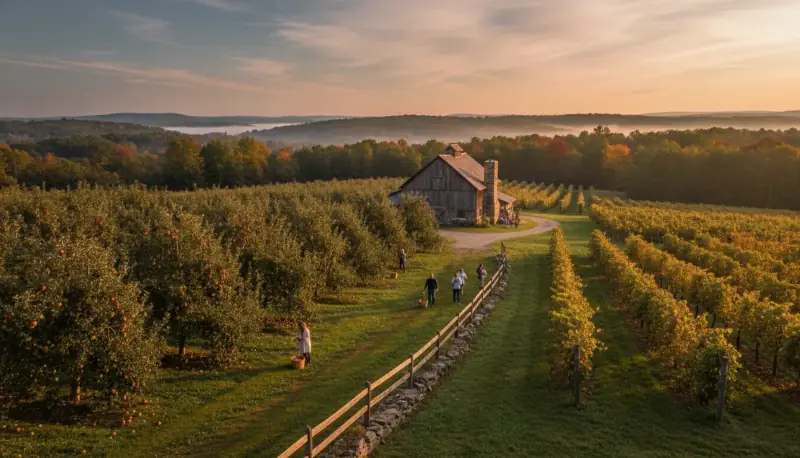
A farmhouse brewery is not simply a regular brewery in a barn. The distinction matters, and it shows up in every decision the operator makes. These taprooms are intentionally sited on land that either produces the ingredients they use, demonstrates the aesthetic that inspired their brand, or both. Some source grain from their own fields or nearby farms. Others build their identity around a specific agricultural product, think a cidery on apple-growing land or a brewery that sources seasonal produce for kitchen operations. The physical setting becomes part of the product story in a way that urban craft breweries cannot replicate.
The customer expectation shifts accordingly. Visitors to a farmhouse taproom come prepared to spend time outside. They expect to see something growing. Many arrive expecting minimal crowds and a slower pace than they'd find in a city brewery. The taproom itself is usually smaller and quieter, a place to linger over a beer while looking out at fields or trees, not a high-volume social venue. This allows for genuine conversation with the brewer or owner, who is often present and invested in explaining not just the beer but the land. It's a fundamentally different value proposition, and understanding this distinction is critical to building a successful farmhouse operation.
The Agritourism Appeal and Visibility Problem
Farmhouse breweries tick several boxes that draw agritourism visitors. They offer a reason to drive into rural areas. They provide quality food and beverage in a setting where dining options are otherwise limited. They tell an authentic story about the place they're located in. Yet despite these strengths, many farmhouse taprooms remain invisible to the very audience most likely to appreciate them: people searching for farm experiences. Agritourism travelers are accustomed to searching for "farm visit near me" or "winery getaway," but "farmhouse brewery taproom" is a less intuitive search phrase, and the best small-scale operations rarely invest in the kind of online marketing that bubbles them to the top of results. This visibility gap means genuinely exceptional farmhouse operations go undiscovered while mediocre tourist traps capture disproportionate attention.
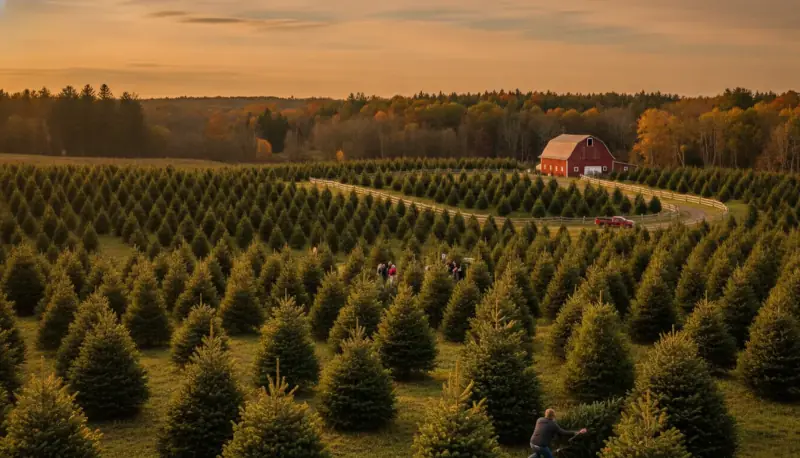
The broader agricultural tourism trend supports this niche. Rural communities that have lost traditional farming income recognize that experiences, not just products, can generate revenue. Visitors are willing to travel significant distances and spend real money for authentic, Instagram-able farm experiences. A well-executed farmhouse taproom hits the aesthetic mark: golden light through barn windows, heritage grains or hops in visible growth, a pint glass held against a sunset. The narrative is compelling and shareable. More importantly, for operators, the revenue model is durable. A taproom creates year-round customer touchpoints in a way that seasonal u-pick operations or farm stands cannot.
What to Expect: The Typical Farmhouse Taproom Experience
Walking into a farmhouse taproom, the rhythm of a visit feels distinctly different from conventional brewery tourism. Most operations are open limited hours, perhaps Friday through Sunday, which shapes the entire experience as something deliberate rather than casual. There's typically a modest selection on tap, usually six to twelve beers, rather than the thirty-tap lineups common in city breweries. This reflects smaller batch sizes and the reality that farmhouse operations prioritize quality and control over variety for variety's sake.
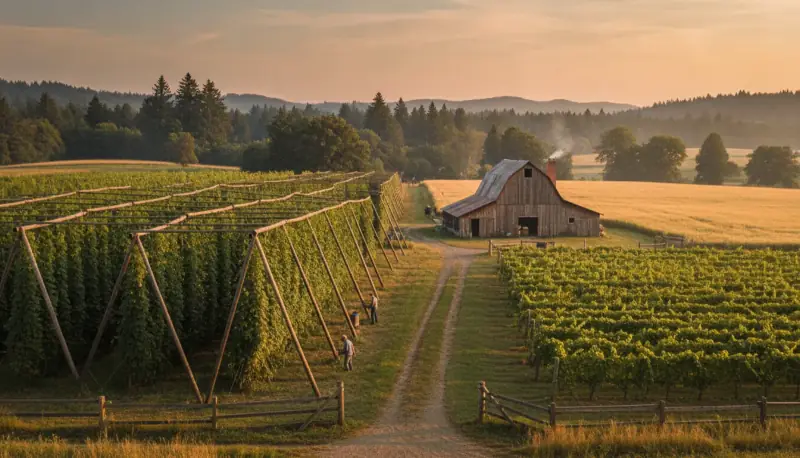
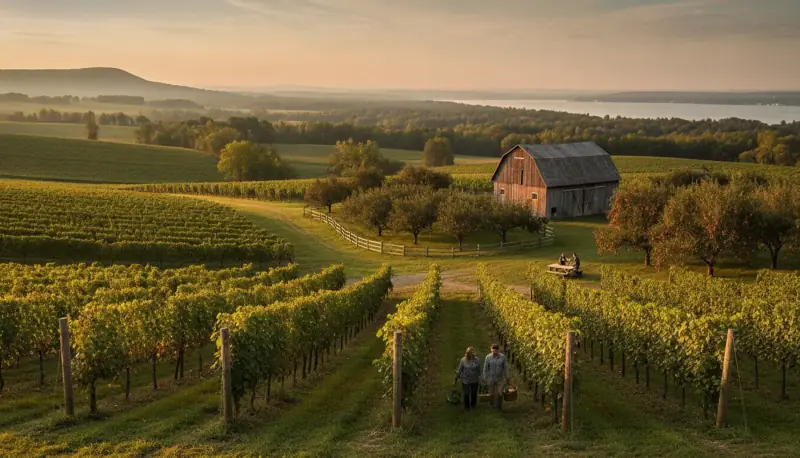
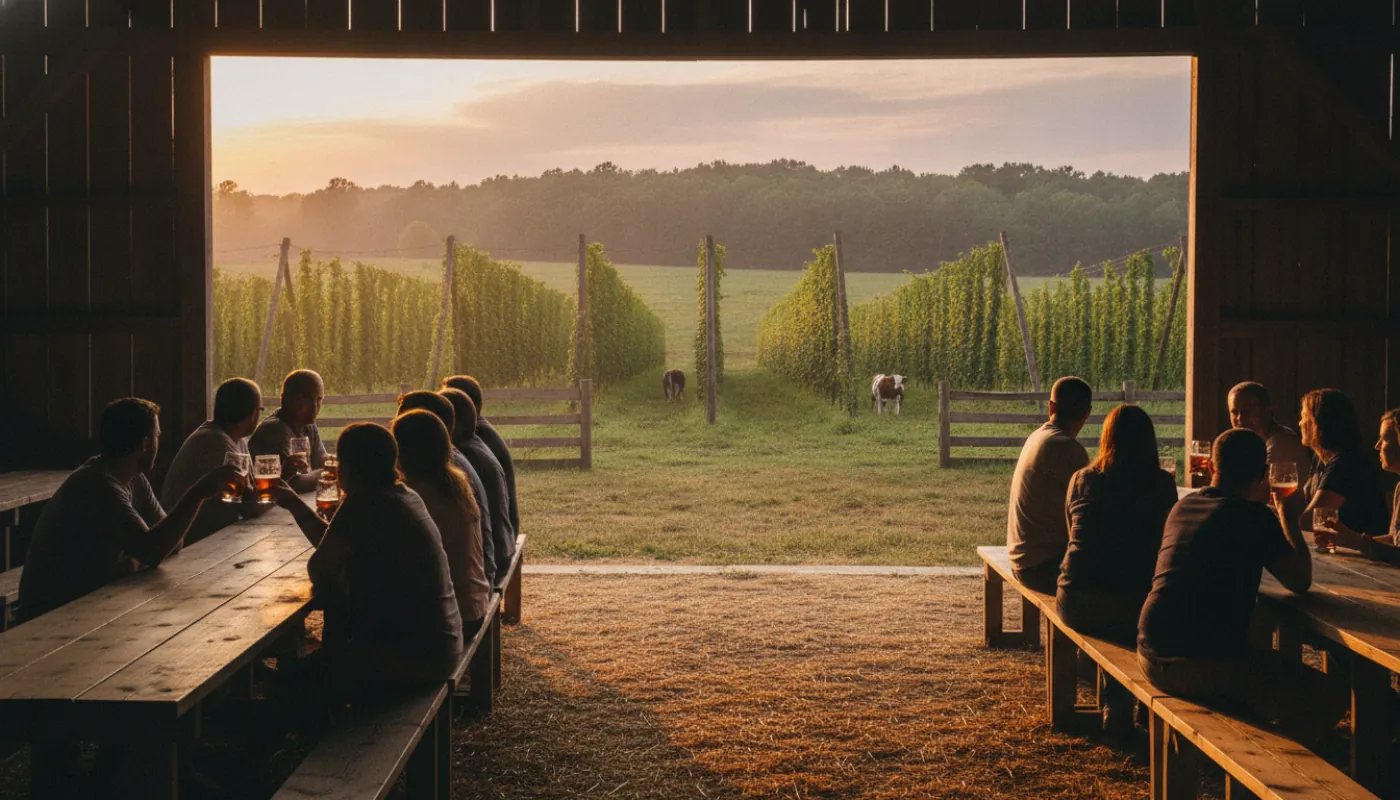
Food is almost always present, though the model varies. Some operations run a full kitchen and serve composed dishes. Others keep it simple with charcuterie, cheese, seasonal produce, or partnered food trucks. Many pair their beer menu with produce from the same land, creating a complete agricultural narrative. Seating is usually outdoors or in high-ceilinged structures with visible agricultural context: an open-sided pavilion overlooking hops fields, a restored barn with large windows facing pasture, or simply picnic tables among orchard rows. Dogs are common. Families with children often appear, especially at afternoon openings. The vibe is unhurried, conversational, and rooted in place in a way that urban taprooms rarely achieve. Many visitors plan visits around the seasons, returning to see the landscape change while visiting the same brewer.
Planning Your Farmhouse Brewery Road Trip
If you're considering a farmhouse taproom road trip, prepare differently than you would for urban brewery hopping. First, check hours carefully, many farmhouse operations close entirely on weekdays or maintain seasonal schedules that shift with harvest or production cycles. Map your route with significant drive time between stops; rural locations mean distances are often longer than they appear. Pair each brewery visit with other regional activities: a u-pick operation, a farmers market, a scenic drive, a farm stay. This transforms a single brewery visit into a multi-day rural experience, which is what agritourism travelers are actually seeking.
Second, arrive hungry. Farmhouse taprooms often don't stock deep food inventories, and popular items sell out, especially on weekends. Many are cash-only or cash-preferred, so bring cash. Call ahead if the brewery offers food or events: many host live music, agricultural demonstrations, or seasonal festivals that dramatically improve the visit but aren't always advertised. Third, set expectations around crowds and noise. You may find yourself the only customer on a Tuesday or part of a large group on a Friday. If you prefer quiet, ask when the operation is typically less busy. Finally, embrace the slower pace. The entire point is to step out of high-velocity tourist culture and spend time with a product, a place, and the person who tends both. Photographs are fine, but presence is the real value.
Why This Model Works for Farm Operators
For agritourism farm operators, the farmhouse brewery model offers several structural advantages over seasonal-only operations. It creates winter and shoulder-season revenue when farm visits otherwise decline. It establishes a direct customer relationship, building brand loyalty that extends beyond single transactions. It leverages existing infrastructure (buildings, land, parking), that might otherwise sit underutilized. Most crucially, it tells the story of the farm itself in a way that pure production never can. A visitor who experiences the landscape alongside the product becomes an advocate, often returning multiple times and recommending the operation to friends.
The model also works because it is inherently limited. By design, farmhouse operations cannot scale into high-volume tourist traps. This constraint is actually a feature: it maintains quality, keeps the character authentic, and allows the operator to manage the business without becoming a hospitality company. The best farmhouse taprooms feel like visiting a friend's land and tasting the results of their care, not like consuming a mass-produced experience. This authenticity is precisely what agritourism visitors are willing to pay for and travel for. For rural operators considering how to diversify, a thoughtfully executed farmhouse taproom, one that genuinely reflects the land and the maker, remains one of the most durable agritourism models available.