Skip to content
Top-rated outdoor gear, ranked

Best Of 2026

Best Homestead Livestock Waterers of 2026

Our top 12 picks, independently ranked. Budget to premium.

On a homestead, water is the chore that never takes a day off. A single milk cow drinks 20 to 30 gallons a day, a horse 8 to 12, and a dozen goats will empty a stock tank faster than you expect in August. Hauling that by bucket is manageable in June and miserable in January, when the hose is frozen and the tank has three inches of ice on it. An automatic waterer moves that job from your back to your plumbing, and for most small farms it is the single piece of infrastructure that most reduces daily labor.

The category splits into three genuinely different machines, and confusing them is how people buy the wrong one. Float-valve bowls are simple open vessels with a toilet-style valve, cheap and easy to hang, and they freeze solid the first hard night. Insulated fountains from Ritchie, Miraco, Behlen and JUG hold a small reservoir inside thick foam, usually with an optional thermostatic heater, and they are the workhorse of the category. Demand-activated units from Bar-Bar-A and Drinking Post hold no standing water at all: the animal pushes a paddle, water rises from below the frost line, and it drains back when they walk away. That third design needs no electricity, which matters if the pasture you want to water is 400 feet from the nearest outlet.

One warning before you shop on unit price alone. The waterer is often the cheaper half of the project. Running a supply line below your local frost line, pouring a small concrete pad so the animals do not churn the approach into a mud hole, and pulling a GFCI circuit for a heated model can easily match or exceed the price of the unit itself. Agritourism operators have a second consideration: a waterer in a guest-facing pen is on display. Clean water with no algae bloom and no mosquito-breeding standing tank is worth paying for when visitors are photographing your animals.

At a glance

Best OverallMid-range

1. WaterMatic 100

Ritchie

$440–560

A compact single-sided insulated fountain that serves up to 20 cattle or horses, which is more animals than most homesteads own, at a price that leaves budget for the trenching. Ritchie's dealer network and parts availability are the strongest in the category.

Best for: The default choice for a homestead running one to twenty head in a single pen or paddock corner.

Fully insulated with a 3.4 gallon per minute fast-refill valve, so a small 2.8 gallon reservoir stays ahead of demand · Drop-in cover lifts off by hand and the trough slopes to a drain hole for genuinely easy cleaning · Stainless and poly construction with a long track record and parts stocked by farm dealers nationwide · 18 inch drink height works for horses, beef cattle and sheep alike

The heat package is an added cost and is required anywhere that freezes · One drink station means a herd bunches up at it in hot weather
Editor's PickPremium

2. JUG Waterer Model 101 (Single Bowl)

JUG Waterers

$845–920

The open-bowl design and 15 year warranty have made this the cult favorite among homesteaders running genuinely mixed livestock. It costs real money, and the people who own one tend to say it was worth it.

Best for: Homesteaders with several species sharing one pen who want to install once and stop thinking about it.

Open bowl at roughly 18 inches serves goats, sheep, calves, alpacas, donkeys, horses and cattle from the same unit · Draw-tube supply and a feed trap keep the bowl unusually clean with minimal fuss · Energy-free version works through hard winters, and the optional 65 watt heater costs only about $10 for a whole season where it is needed · 15 year warranty and simple field-serviceable internals

Roughly double the price of a mid-tier fountain before you have dug anything · Permanently installed and plumbed, so it is no help to a rotational grazing plan · Needs draining if it will sit unused for weeks or algae will find it

Best ValueMid-range

3. Lil' Spring 3000 Single Sided

Miraco

$360–500

A 6 gallon single-trough poly fountain built specifically around small stock, with a low drink height and a domed cover that discourages goats from standing on it. For a sheep or goat operation it does everything the pricier units do for less.

Best for: Small-ruminant homesteads and anyone watering goats, sheep or calves on a budget.

Purpose-built low drink height for sheep, goats and calves rather than a cattle unit scaled down · Rated for roughly 50 head of sheep or beef on a 6 gallon basin · Side access panel reaches the waterline and the optional heater without dismantling anything · 5 year manufacturer warranty and corrosion-proof polyethylene body

The heated 3001 version costs meaningfully more, and the base unit needs it in a cold climate · Low drink height is awkward for full-size horses · Small reservoir depends on decent line pressure keeping up

Best PremiumPremium

4. Omni 2 (Model 16619)

Ritchie

$900–1,050

A double-sided stainless trough with thermostatically controlled elements bonded to the underside, rated for up to 40 head. This is the unit to buy when winter is the problem and you want it solved permanently.

Best for: Cold-climate operations with a real herd, or a shared unit straddling two paddocks.

Stainless steel trough with underside heat elements holds frost-free service through severe winters · Two drink stations serve up to 40 cattle or horses, or straddle a fence line between two paddocks · Large access panel makes valve service and cleaning straightforward · Made in the USA with widely stocked replacement parts

Around a thousand dollars before installation, which is hard to justify for a handful of animals · Requires a dedicated 120V GFCI circuit run to the pasture · Heavy enough that setting it on a pad is a two person job

Mid-range

5. Bar-Bar-A Drinker

Bar-Bar-A

$509–679

A paddle-activated drinker that holds no standing water and uses no electricity, filling on demand and draining back below the frost line. It is the answer for pastures where running power is impractical or expensive.

Best for: Remote paddocks and off-grid setups where running a power circuit is the expensive part.

No electricity at all, which removes both the trenched circuit and any stray-voltage shock concern · No standing water means no algae, no mosquito breeding and nothing to freeze on the surface · Water comes up at ground temperature, cool in summer and above freezing in winter · Uses less water overall because nothing evaporates from an open trough

Animals have to learn to push the paddle, which usually takes an hour of curiosity but not always · Paddles and valve components are wear items you will replace over the years · You cannot glance at it to confirm water is available, so a failed valve is invisible until an animal is thirsty

Premium

6. Thrifty King CT1-2000 (Model 16271)

Ritchie

$709–830

An energy-free single-drink fountain wrapped in heavy insulation, rated for herds up to 30 cattle with no heater and no power drop. If you have enough animals to keep it cycling, it eliminates the electric bill entirely.

Best for: Cattle operations in moderate winters that want to skip running power to the pasture.

Thick high-performance insulation surrounds the entire 11.2 gallon reservoir, no electricity required · Durable poly construction that shrugs off cattle abuse and does not corrode · Rated to 30 head, so it scales past what most fountains this size handle · No circuit to trench means the install is plumbing only

Energy-free performance depends on frequent drinking, so a small group in deep cold may still ice over · Ball or insulated cover has to be learned, which small ruminants often never manage · Costs more than a heated fountain of similar capacity

Mid-range

7. Drinking Post Ultimate

Drinking Post

$439–759

A non-electric post with a stop-and-drain valve buried 18 inches below the frost line, delivering roughly 50 degree water year round. Simple, few moving parts above ground, and available in multiple heights.

Best for: Horse owners and small cattle operations wanting a clean, powerless install in individual paddocks.

Frost-free without electricity, with the working valve safely below the frost line · Delivers about 50 degree water in every season, which encourages winter drinking · Nothing standing above ground to grow algae or breed mosquitoes · Multiple post heights and a cattle version, so one product line covers a mixed farm

The post can sit tall for shorter animals, and some owners report the paddle takes real effort to push · Paddles are a known replacement part over the life of the unit · Serves one animal at a time, which slows a herd coming in from pasture

Best BudgetBudget

8. 88SW Galvanized Steel Automatic Stock Waterer

Little Giant

$45–70

A heavy-gauge galvanized bowl with a float valve that hooks to a garden hose or half inch pipe and mounts at whatever height you need. It is the cheapest honest way to stop carrying buckets in the warm months.

Best for: Three-season use, heated barns, and anyone testing whether automatic watering suits their setup before spending real money.

Under sixty dollars at most farm retailers, with mounting plates included · Works for horses, cattle, hogs and goats with no training needed · Mounts at any height, so one part number suits several species · Easily adjustable float that most owners find sturdy in service

No insulation and no heater, so it freezes solid the first hard night · Owners report it is awkward to scrub clean and the galvanizing eventually rusts · Float valves on these are a known leak point over time

HydroStation Electric Waterer AHW30
Mid-range

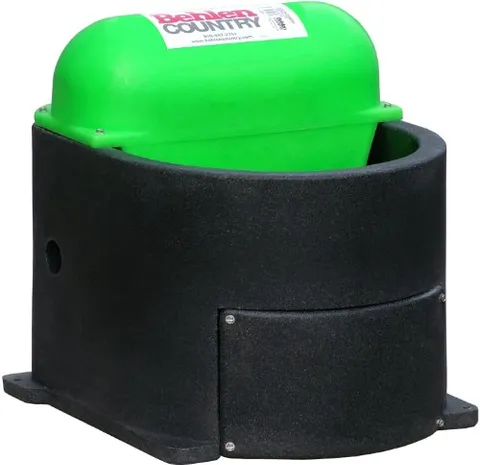
9. HydroStation Electric Waterer AHW30

Behlen Country

$475–520

An insulated poly fountain built around small stock, heated by a 75 watt infrared pad rather than a submerged element. The 16 inch drink height is set deliberately for sheep, goats, calves and minis.

Best for: Goat, sheep and calf operations in cold climates that want heat without a big cattle fountain.

75 watt infrared pad is thermostatically controlled, coming on below 42F and shutting off above 73F · Corrosion-free heavy poly with thick insulation and UV protection for outdoor use · Removable drain plug and built-in anchor points make cleaning and mounting simple · Efficient heater draw keeps the winter electric cost low compared to element-heated units

16 inch drink height is too low to be comfortable for full-size horses · Needs a supply line in the 25 to 55 psi range, so very low-pressure gravity systems are out · Requires a powered circuit at the pen, which is the expensive part of the install

Premium

10. MiraFount 3345

Miraco

$780–900

A 30 gallon energy-free fountain with a roll-away ball closure and two to three inches of urethane insulation, rated for 75 head of beef. Built for a real herd, and priced accordingly.

Best for: Small-farm cattle operations with 20 or more head that want no electric service at the water point.

30 gallon reservoir rated for 75 head beef or 30 head dairy from a single trough · Two to three inches of urethane at roughly R-7 per inch keeps water cool in summer and unfrozen in winter · Roll-away ball closure keeps debris out without an electric heater · Removable dome valve cover and sloped sealed bottom for quick cleaning

Energy-free performance depends on a large enough herd drinking often, so it is oversized for a hobby farm · Ball closures are a real barrier for sheep, goats and young stock · A heated 3345E variant is needed in the harshest climates, which adds cost

5 Gallon Heated Flat-Back Bucket (FB-120)
Budget

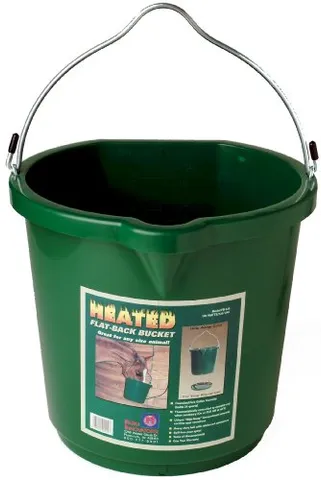
11. 5 Gallon Heated Flat-Back Bucket (FB-120)

Farm Innovators

$40–60

Not an automatic waterer, but the cheapest way to solve the actual winter problem of ice, and the right first purchase for a barn with power and only a few animals. Thermostatically controlled so it heats only when it needs to.

Best for: Small barns with power where the winter ice, not the daily filling, is the real problem.

Built-in thermostat runs the 120 watt element only near freezing, cutting off around 60F · Hidden cord compartment gives real anti-chew protection, which is the failure point on cheap heated buckets · Flat back hangs flush on a stall wall and the pour spout makes dumping easy · Under sixty dollars, no plumbing and no trenching

Still a bucket, so you are filling it by hand every day · Needs a GFCI outlet within cord reach of every pen you use it in · 5 gallons is one day of water for a single horse and much less for a cow

Trough-O-Matic Stock Tank Float Valve (TM830AS)
Budget

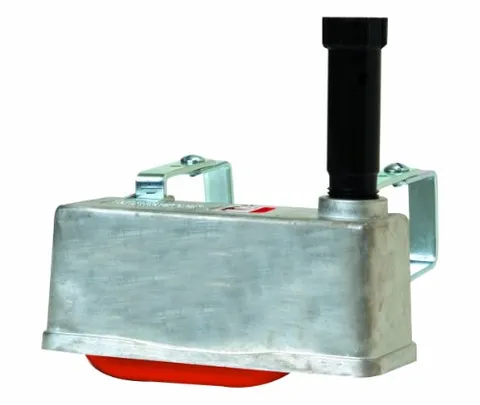
12. Trough-O-Matic Stock Tank Float Valve (TM830AS)

Little Giant

$40–65

A float valve in a protective aluminum housing that clamps to the rim of a stock tank you already own, with an anti-siphon version for hookups where backflow protection matters. It automates the tank rather than replacing it.

Best for: Rotational grazers and anyone already moving stock tanks who wants to stop standing there with a hose.

Turns any existing stock tank into an automatic waterer for the price of a fitting · Aluminum housing shields the float from animals leaning on it · Anti-siphon model protects the supply line, which some jurisdictions require · Made in the USA and easy to service or replace in the field

Zero freeze protection, so it is a warm-season or heated-tank solution only · You still own an open tank, meaning algae, debris and regular scrubbing · Only as good as the tank it is clamped to

How we choose

We built this list around what actually determines whether a waterer survives on a small farm: how it handles freezing, how easy it is to clean without tools, whether the drink height suits mixed species, and how repairable the valve is when it eventually fails. We prioritized units sold through farm dealers with long parts availability over generic imports, because a waterer you cannot get a float or a heat element for is a waterer with a two-year life. Tiers reflect what you get, not just what you pay. Budget picks under roughly $100 are open bowls and float valves that add convenience but no freeze protection, so they suit three-season use or a heated barn. Mid tier from about $350 to $700 buys a real insulated fountain or a non-electric drain-back post, enough for one or two pens and the range most homesteads should be shopping in. Premium above $700 buys heavier insulation, larger reservoirs, multiple drink stations, and warranties measured in decades, which pays back only if you are watering a real herd or working in a genuinely cold climate. Prices are current US street ranges and move with dealer and color option. We have no relationship with any manufacturer here, we were not given product, and no brand paid for placement or influenced the ranking.

Common questions

It depends on your winter and your herd size. Energy-free designs like the Ritchie Thrifty King and Miraco MiraFount rely on two things: thick insulation, and enough animals drinking often enough to keep the ball cover moving and warm water flowing up from the line. A dozen cattle in Missouri will keep one open. Two goats in Minnesota will not, and you will be chopping ice out of it. Demand-activated posts like the Bar-Bar-A and Drinking Post work differently, holding no water above ground at all, so herd size does not matter to them. What matters instead is burial depth, and getting that wrong is the usual cause of a frozen unit. If you are in a cold region with a small number of animals, a heated fountain on a GFCI circuit is the honest answer.

Below your local frost line, and deeper than you think. Extension guidance for horse operations commonly recommends burying supply lines 4 to 6 feet down where possible, both to clear frost and to pick up geothermal warmth from the surrounding soil. Non-electric drain-back posts specify roughly 18 inches below the local frost line for the stop-and-drain valve. Call your county extension office or building department for your area's official frost depth before you rent a trencher, because a line set at the minimum legal depth in an unusually cold winter is the classic January failure.

This is the real trade-off of automatic waterers and it deserves more attention than it gets. A bucket tells you at a glance whether it was emptied overnight. A float-fed bowl tells you nothing. Veterinarians who work with horses recommend metered units if tracking intake matters to you, and metered options exist across the Ritchie and Nelson lines. If you skip the meter, replace the visual check with a behavioral one: watch each animal actually drink once a day. A horse standing at a full waterer without drinking is telling you something, and you need to be there to see it.

Sometimes, and drink height is the deciding factor. Purpose-built small-stock units such as the Behlen HydroStation AHW30 and the Miraco Lil' Spring 3000 sit around 16 inches, which is right for sheep, goats, calves and minis but low and awkward for a full-size horse. Open-bowl designs like the JUG sit around 18 inches, which is the sweet spot for genuinely mixed herds and is why homesteaders keep recommending them. Cattle-scale fountains with ball covers are the worst choice for small ruminants, because a lamb or kid may never learn to push the cover and cannot reach it well if it does.

Less than a stock tank, but not zero. Enclosed insulated fountains stay remarkably clean because sunlight never reaches the water, which is what drives algae. Plan on lifting the cover monthly to check for grain, hay and manure in the trough, and giving it a full scrub and drain twice a year. Look for a removable cover panel and a sloped bottom with a drain plug before you buy, because a unit you have to bail out by hand will not get cleaned. One caution from owners of premium units: if a waterer sits unused for weeks, drain it rather than letting standing water sit, or you will find algae in it anyway.

Not the permanently installed ones, which are anchored to a concrete pad and plumbed in place. That is a genuine limitation, not a small one, for operations moving stock every few days. The practical answers are to place fixed waterers at the shared corner of several paddocks so one unit serves multiple cells, or to plumb frost-free hydrants with quick couplers along the lane and move a float-valve tank between them. The Little Giant Trough-O-Matic exists precisely for that second approach, converting whatever tank you are already moving into an automatic one for the cost of a fitting.

Some links are affiliate links, and we may earn a commission at no extra cost to you. It never affects our rankings.

In your pocket

Take farm country with you.

Free, no account needed. Farm maps, season checklists, and the crop identifier in your pocket.

  • Every farm stand and u-pick in your pocket

  • Plan a multi-stop farm day and save it

  • Snap a photo. AI names the crop

  • GPS tracking that keeps recording down the county road

The Farm Country Hubs app dashboard

For operators

Run a farm business?
Get on the map for free.

Claim your free listing for a branded page and a spot in the Farm Country Hubs app, then add bookings and digital waivers whenever you’re ready. No setup cost.