Skip to content
Top-rated outdoor gear, ranked

Best Of 2026

Best Farm Tools of 2026

Our top 10 picks, independently ranked. Budget to premium.

Outfitting a homestead or small farm is a different problem than outfitting a backyard garden. You are working an acre or five, not a couple of raised beds, but you also can't justify the 40-horsepower tractor and implement shed that a commodity row-crop operation runs. The sweet spot is a small set of seriously built tools that scale human effort: a broadfork that opens compacted ground without a tiller pass, a wheel hoe that turns a half-day of weeding into forty minutes, a seeder that puts crops in straight and evenly, and one or two pieces of power equipment that earn their keep year-round. This guide covers that spectrum, from a $25 Japanese digging knife to a $5,000-plus Italian walk-behind tractor, so you can see where the real price-performance breaks are instead of guessing from an endless wall of lookalike listings.

Everything here is a real, currently available model with a track record on working farms and homesteads: tools you will find recommended by market gardeners, county extension agents, and agritourism operators who use them in front of paying guests. We deliberately span three tiers. Budget picks are the tools every homestead should own on day one and that punch far above their price. Mid-tier picks are the workhorses: the wheel hoes, seeders, and farm saws where spending $130 to $550 buys you decades of service. Premium picks are capital equipment: the all-steel broadfork that carries a lifetime warranty, the precision seeder market gardeners standardize on, and the two-wheel tractor that can replace a small fleet of single-purpose machines on one to three acres.

If you run an agritourism operation (a farm stay, a u-pick, a wedding venue with working grounds), durability and presentability both matter. Guests notice rusted, wobbling equipment, and downtime during your season costs real revenue. The picks below were weighted toward tools that hold up to daily use, have parts and warranty support behind them, and won't embarrass you when they're sitting in the barn aisle during a tour.

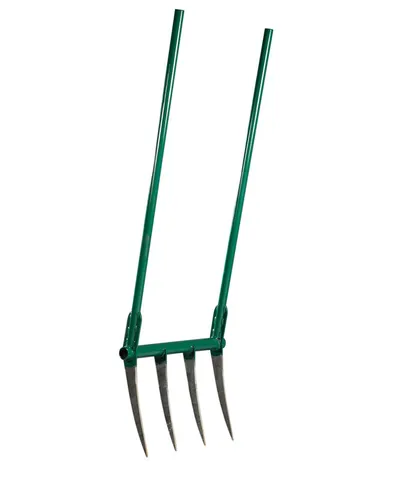
Meadow Creature Tall Broadfork (14-inch tines)
Best OverallPremium

1. Meadow Creature Tall Broadfork (14-inch tines)

Meadow Creature

$270–$330

The all-steel, USA-made broadfork that no-till growers standardize on: it opens compacted ground 14 inches deep with no wooden handles to snap and a full break-it-and-they-replace-it warranty. It is the single highest-leverage soil tool a homestead can own.

Best for: Homesteaders and market gardeners breaking or maintaining beds in heavy, compacted, or rocky soil

Welded solid-steel construction with no joints, bolts, or wooden handles to fail · 14-inch tines fracture hardpan and tiller pan that lighter forks can't touch · Lifetime warranty, damaged forks are replaced or refunded · Maintains soil structure, replacing repeat tiller passes on established beds

At 22 lb it's heavy, and the technique takes practice on unbroken ground · Costs three to four times what wooden-handled broadforks do · Overkill for a few raised beds, the 12-inch People's Broadfork is cheaper and lighter

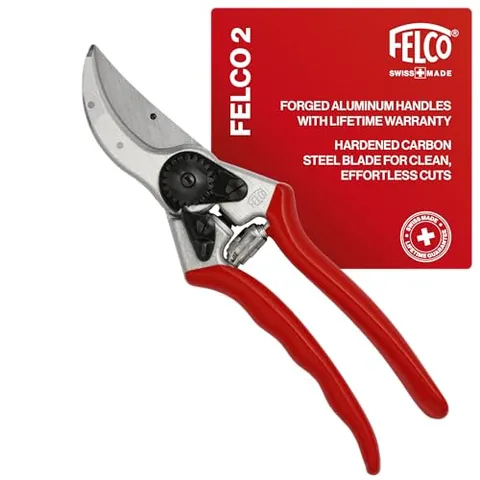
Felco 2 Classic Hand Pruner (F-2)
Editor's PickMid-range

2. Felco 2 Classic Hand Pruner (F-2)

Felco

$60–$80

The Swiss-made bypass pruner that has been the orchard, vineyard, and nursery benchmark since 1948: every blade, spring, and bolt is replaceable, so one purchase serves for decades. No tool on a homestead gets used more hours per year.

Best for: Anyone maintaining an orchard, vineyard, brambles, or ornamental plantings guests walk through

Fully rebuildable: replacement blades, springs, and hardware are stocked everywhere · Forged aluminum handles with a lifetime guarantee on the body · Clean bypass cuts up to about 1 inch protect fruit trees and berry canes from disease · Comfortable for all-day pruning sessions

Several times the price of hardware-store pruners · One-size body, small or very large hands may prefer the F-6 or F-8 variants

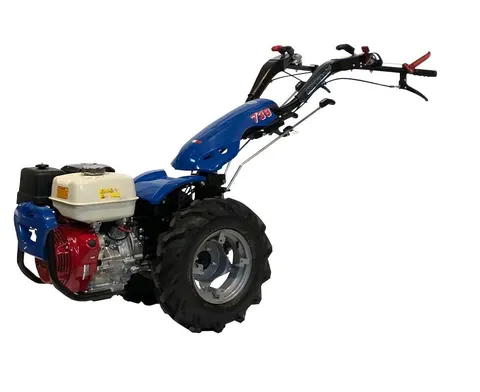
BCS 739 Walk-Behind Tractor (Honda GX340)
Best PremiumPremium

3. BCS 739 Walk-Behind Tractor (Honda GX340)

BCS

$5,300–$6,600

The 11 hp two-wheel tractor that hits the sweet spot of power, features, and price for one to three acres: one gear-driven power unit runs a tiller, power harrow, flail mower, chipper, and dozens of other PTO attachments. It is the closest thing to a do-everything machine at homestead scale.

Best for: Market gardens and diversified homesteads of one to three acres mechanizing without a full-size tractor

Honda GX340 engine, all-gear drive, and PowerSafe clutch built for decades of service · Runs the full BCS attachment catalog: till, mow, harrow, chip, blow snow with one machine · Three speeds forward and reverse plus differential lock make bed-scale work nimble · Far cheaper to buy and maintain than a compact four-wheel tractor

Roughly $5,300–$6,600 for the tractor alone; attachments add $500–$2,500 each · Walk-behind operation is physical work on slopes and long days · No loader, manure piles and gravel still need a cart or a bigger machine

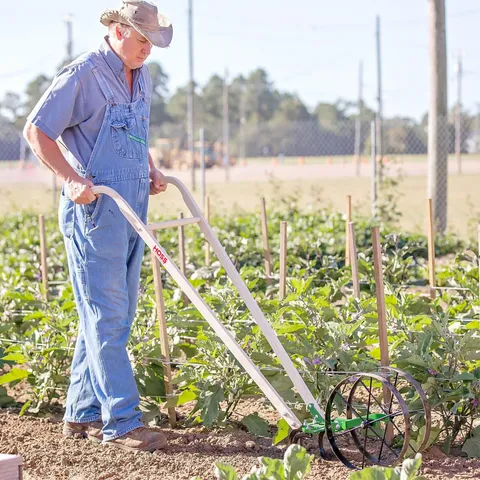
Hoss Double Wheel Hoe
Mid-range

4. Hoss Double Wheel Hoe

Hoss Tools

$210–$260

An Amish-built, USA-made wheel hoe that straddles young rows and cultivates both sides at once, turning hours of hand-weeding into minutes. The attachment ecosystem (oscillating hoes, sweeps, plows, even a seeder), makes it the backbone of a low-cost growing operation.

Best for: Row-crop gardens from 1,000 sq ft to an acre where a tiller is too much and hand-hoeing too slow

Straddles rows to weed both sides in a single pass · Largest attachment selection in its class at lower prices than European rivals · Powder-coated steel frame and hardwood handles built for decades · Users report doubling garden size with the labor saved

Assembly is fiddly and some users report hardware that needs care to seat correctly · Attachments are sold separately and the total creeps up fast · Less useful in established no-till beds with heavy mulch

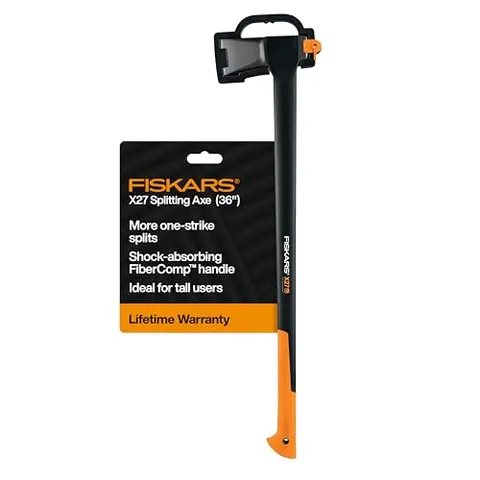
Fiskars X27 Super Splitting Axe (36-inch)
Best ValueBudget

5. Fiskars X27 Super Splitting Axe (36-inch)

Fiskars

$60–$80

The default recommendation for splitting firewood by hand: perfected weight distribution and blade geometry in a virtually unbreakable composite handle, for well under $80. For wood-heated homesteads and fire-pit-equipped farm stays, nothing matches its price-to-work ratio.

Best for: Anyone processing firewood for home heat, sugar shacks, or guest fire pits

Splits medium to large rounds with noticeably less effort than traditional mauls · Shock-absorbing FiberComp handle is effectively unbreakable in normal use · Lifetime warranty · Light enough (about 6.3 lb) to swing all afternoon

Composite handle can't be replaced if it ever does fail, you replace the axe · 36-inch length is awkward for shorter users (the X25 fits better) · Not a felling axe, it's a dedicated splitter

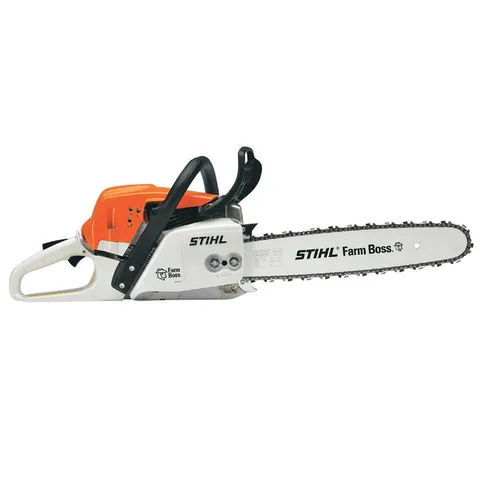
Stihl MS 271 Farm Boss
Mid-range

6. Stihl MS 271 Farm Boss

Stihl

$530–$620

The classic farm-and-ranch saw: enough displacement to buck firewood and clear storm damage all day, with a pre-separation air filter that runs far longer between cleanings and a dealer network in every rural county. It's the saw most homesteads actually end up owning.

Best for: Homesteads with a woodlot, wood heat, or regular storm and fence-line cutting

Strong mid-range power for firewood, fence lines, and storm cleanup · Fuel-efficient engine runs about 20% longer per tank than its predecessor · Pre-separation air filtration extends filter life up to five times · Sold and serviced through local dealers with real parts support

Dealer-only sales, you can't meaningfully price-shop online · Heavier than homeowner-class saws for the same bar length · Gas two-stroke means mixing fuel, winter starting rituals, and more noise than battery saws

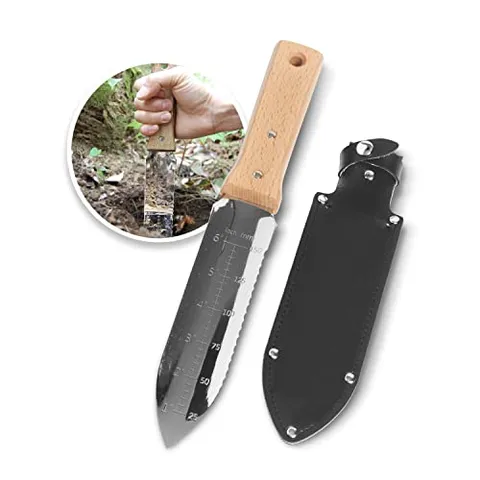
Nisaku NJP650 Hori Hori Weeding Knife
Best BudgetBudget

7. Nisaku NJP650 Hori Hori Weeding Knife

Nisaku

$22–$35

The original Japanese hori hori: a 7.25-inch stainless blade that digs, weeds, divides, cuts twine, and measures planting depth, the one tool that lives on every homesteader's belt. For around $25 it does the work of half a drawer of single-purpose gadgets.

Best for: Every homesteader, gardener, and farm-stay groundskeeper, the universal first purchase

Full-tang Japanese stainless steel with a serrated edge and depth markings · Replaces trowel, weeder, bulb planter, and utility knife in one tool · Decades-long track record, it's the model others copy · Cheap enough to buy one per worker

Basic wooden handle and sheath are functional, not fancy · Stainless blade holds a working edge, not a fine one

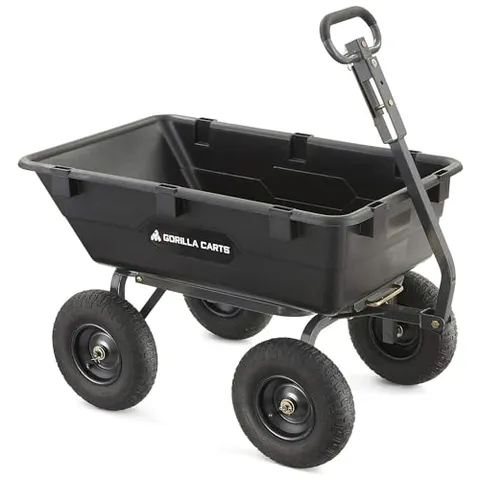
Gorilla Carts GOR6PS Heavy-Duty Poly Dump Cart
Budget

8. Gorilla Carts GOR6PS Heavy-Duty Poly Dump Cart

Gorilla Carts

$130–$190

A 1,200 lb capacity poly dump cart with a quick-release tipping bed and a handle that converts for hand-pulling or towing behind a mower or ATV. It replaces a wheelbarrow for compost, feed, firewood, and fencing runs, and never tips over sideways doing it.

Best for: Daily hauling around barns, coops, gardens, and guest grounds

1,200 lb rating and 6 cu ft poly tub that won't rust like steel beds · Patented quick-release dump mechanism actually works one-handed · 2-in-1 handle converts between hand-pull and tractor/ATV towing · 13-inch pneumatic tires roll over rough farm ground

Pneumatic tires go flat, many owners eventually fit no-flat replacements · Poly bed scratches and stains with manure and gravel duty · Wide footprint doesn't thread narrow garden paths like a barrow does

EarthWay 1001-B Precision Garden Seeder
Mid-range

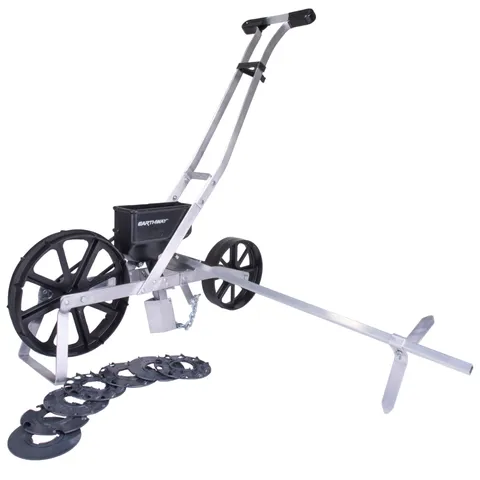
9. EarthWay 1001-B Precision Garden Seeder

EarthWay

$120–$160

The classic American plate seeder: drop in one of seven seed plates, walk the row, and it opens the furrow, spaces the seed, covers, firms, and marks the next row in one pass. It's the affordable on-ramp to mechanized seeding before a Jang makes sense.

Best for: Homestead gardens planting big blocks of corn, beans, and peas on a budget

Opens, plants, covers, firms, and marks rows in a single pass · Seven interchangeable plates cover corn, beans, peas, beets, radish, and more · Lightweight and simple, nothing to maintain but an occasional bolt check · Roughly a quarter the price of precision roller seeders

Plate metering is approximate, small or irregular seed spacing gets gappy · Wants well-prepared, clod-free soil to perform · Plastic hopper and frame feel light next to a Jang

Jang JP-1 Push Seeder
Premium

10. Jang JP-1 Push Seeder

Jang

$500–$625

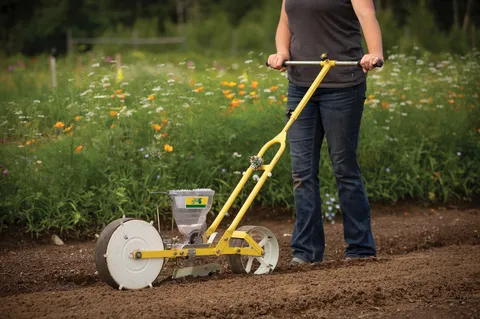
The single-row precision seeder market farms worldwide standardize on: interchangeable rollers singulate everything from carrot seed to peas at exact spacing and depth, in soil conditions that stall cheaper seeders. Growers consistently report it pays for itself in saved labor and thinning within a season.

Best for: Market gardens and produce-selling homesteads doing weekly succession plantings

Roller singulation gives near-perfect spacing, drastically less thinning and wasted seed · Over 40 roller sizes handle crops from arugula to corn · Heavy steel build handles damp, rocky, debris-laden beds · Plants a 25-foot bed row in seconds, evenly and at consistent depth

Rollers cost extra (around $15–$20 each) and you'll want several · Serious money for a push seeder if you only plant a small kitchen garden · Singulation accuracy still rewards well-prepared beds

How we choose

We selected and ranked these tools by overall recommendation for a homesteader or small-farm operator working roughly a quarter acre to five acres, not by price, brand, or commission. For each category we researched manufacturer specifications and pricing, cross-checked street prices across Amazon, farm-supply retailers (Rural King, Agri Supply, Northern Tool), and specialty dealers (Johnny's Selected Seeds, Neversink Tools, BCS America dealers), and read long-term reviews from market-gardening publications, extension services, and working farmers rather than first-impression unboxings. Ranking weighs build quality and expected service life most heavily, then versatility across the season, ergonomics for daily use, and parts/warranty support; price-to-value determines tier placement, not rank. The tiers differ in role: budget picks are day-one essentials under about $180, mid-tier picks are buy-once workhorses from roughly $130 to $620, and premium picks are capital equipment where the warranty and labor savings justify the outlay. We have no relationship with any manufacturer listed, no one paid for placement, and we receive no compensation that influenced rank or award, links are provided for reader convenience only.

Common questions

For intensive vegetable production, orchard rows, and properties under about three acres, a quality two-wheel tractor like the BCS 739 usually wins: it costs a fraction of a compact tractor, fits between beds, runs dozens of PTO attachments (tiller, power harrow, flail mower, snow blower, chipper), and doesn't compact your soil the way a heavier machine does. A compact four-wheel tractor makes more sense when you regularly need a loader (moving gravel, manure piles, round bales), or you're maintaining five-plus acres of pasture and lanes. Many established homesteads eventually own both, but the two-wheel tractor is the better first machine for growers.

They do different jobs. A tiller mixes the top 4–8 inches and, used repeatedly, can create a compacted 'tiller pan' just below blade depth. A broadfork like the Meadow Creature reaches 12–16 inches down and fractures that compaction without inverting soil layers or destroying soil structure, which is why no-till and low-till market gardeners treat it as essential, not optional. On established beds, many growers eventually park the tiller entirely and maintain beds with a broadfork, compost, and a wheel hoe.

Start with the budget tier here: a hori hori knife for planting, weeding, and a hundred small jobs; a serious splitting axe if you heat with wood or run fire pits for guests; and a dump cart, because you will move more compost, feed, firewood, and fencing material than you think. Add quality bypass pruners (the Felco 2 will outlive most of your other purchases) and a wheel hoe once your garden passes about 1,000 square feet. Hold off on powered equipment until a specific recurring job justifies it, that's when the money is well spent.

In these two cases, measurably better. Felco 2 pruners have fully replaceable blades, springs, and bolts, so a $70 tool can be rebuilt indefinitely instead of landfilled every two seasons; that's why they've been the orchard and vineyard standard since 1948. Meadow Creature welds its broadforks from solid steel plate with no wooden handles or mechanical joints to fail, and backs them with a break-it-and-we-replace-it warranty, wooden-handled broadforks routinely snap in heavy clay or rocky ground, which is exactly where homesteads need them. Cheap versions of simple tools (trowels, carts) are often fine; cheap versions of high-leverage tools are where you get hurt or buy twice.

If you cut more than a cord or two a year, clear storm damage, or maintain a woodlot, a gas farm-class saw like the Stihl MS 271 is still the practical choice: more sustained power, refuels in seconds, and any rural dealer can service it. Battery saws have become excellent for limbing, fence-line work, and occasional use, and they're quieter around guests and livestock, but on an all-day firewood cut you'll be managing a pile of batteries. Many operations run a gas saw as the primary and a small battery saw for quick jobs near the barn.

A realistic day-one kit from this guide (hori hori, splitting axe, dump cart, and Felco pruners), runs about $300. Add a wheel hoe and an Earthway seeder as the garden scales and you're near $700 total, which covers most of a productive homestead's first two seasons. The big step is powered and precision equipment: a farm chainsaw adds roughly $550, a Jang seeder about $600, and a BCS two-wheel tractor with a tiller will land between $6,000 and $8,000. For agritourism operators, that last tier is best treated as capital expenditure justified by labor savings and presentation, not as a startup requirement.

Some links are affiliate links, and we may earn a commission at no extra cost to you. It never affects our rankings.

In your pocket

Take farm country with you.

Free, no account needed. Farm maps, season checklists, and the crop identifier in your pocket.

  • Every farm stand and u-pick in your pocket

  • Plan a multi-stop farm day and save it

  • Snap a photo. AI names the crop

  • GPS tracking that keeps recording down the county road

The Farm Country Hubs app dashboard

For operators

Run a farm business?
Get on the map for free.

Claim your free listing for a branded page and a spot in the Farm Country Hubs app, then add bookings and digital waivers whenever you’re ready. No setup cost.