Skip to content
Top-rated outdoor gear, ranked

Best Of 2026

Best Homestead Beekeeping Supplies of 2026

Our top 11 picks, independently ranked. Budget to premium.

Beekeeping is one of the few homestead enterprises where the equipment budget is front-loaded and then almost flat. You buy boxes, frames, a veil, a smoker and a mite tester once, and if you buy the durable versions you will still be using most of them in ten years. The mistake that costs the most money is not overspending on a first hive. It is buying a cheap bundled kit that arrives warped, unpainted and short a queen excluder, then replacing the whole thing in year two after a wet winter takes the boxes apart.

The market splits cleanly into three bands. Under about $200 you are buying commodity fir or pine woodenware, a basic veil and the hand tools, which is genuinely enough to run two colonies well if you are willing to paint or wax the boxes yourself. Between $200 and $400 you get assembled and finished woodenware from a supplier with real inventory depth, a ventilated suit you will actually wear in August, and monitoring gear. Above $400 you are paying for extraction capacity, American-made stainless steel, and hive designs that do something structurally different. Very little of that upper band is about protecting bees better. It is about protecting your time once you have more than a few colonies.

For a small farm or an agritourism operation the calculus shifts again. Two colonies is a hobby, and the honey pays for the feed. Six to twelve colonies is a product line, and at that point extraction time, hive weight monitoring and the ability to work a yard in July heat stop being luxuries. If you host visitors, you also need at least one hive that can be opened or demonstrated safely in front of people, plus spare protective gear in sizes that fit guests. Those two needs, throughput and demonstration, are what separate a farm kit list from a backyard one.

10 Frame Complete Hive Kit Combo
Best OverallMid-range

1. 10 Frame Complete Hive Kit Combo

Mann Lake

$225–$240

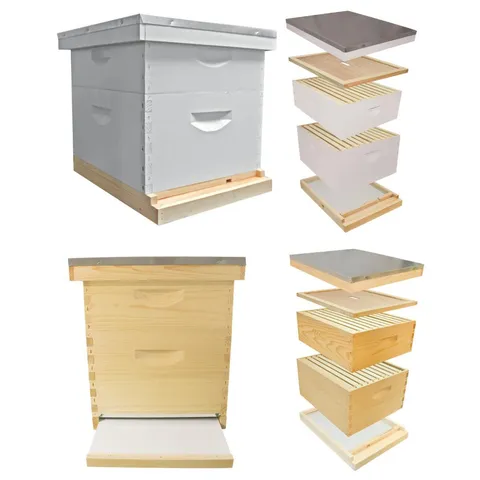
A fully assembled deep plus medium super with all 20 frames, cover, inner cover and screened bottom board, from the largest beekeeping supplier in North America. It is the shortest path from box on the porch to bees in the yard.

Best for: The homesteader who wants one purchase that covers a complete, expandable hive without a build project.

Arrives assembled and squared, no tools or glue-up weekend · Includes the medium super most starter kits leave out, so you are not reordering in June · Pine woodenware made in the USA with parts availability years from now · Screened bottom board supports mite monitoring from day one

Unpainted options need finishing before the first wet season · No smoker, hive tool or protective gear included · A full ten-frame deep gets heavy for one person

Vented Beekeeping Suit With Veil (Z332)
Best ValueMid-range

2. Vented Beekeeping Suit With Veil (Z332)

Mann Lake

$175–$195

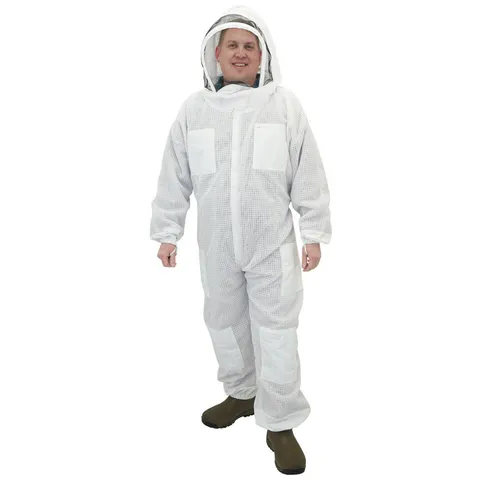
Three-layer ventilated construction with a self-supporting round veil at well under the price of the boutique ventilated suits. This is the suit that gets worn in August instead of left in the barn.

Best for: Anyone working hives in summer heat who wants full coverage without paying boutique prices.

Rubberized netting between two woven layers keeps stingers off skin while breathing · Eight pockets and reinforced knees survive real farm use · Sizes run S through 3XL, which matters when outfitting family or staff · Removable veil so the suit can go in a cold wash

Bulkier than a jacket for a quick five-minute check · Round veil catches on brush and low branches in wooded yards · Light color shows propolis and smoke stains permanently

Varroa EasyCheck
Editor's PickBudget

3. Varroa EasyCheck

Véto-pharma

$25–$36

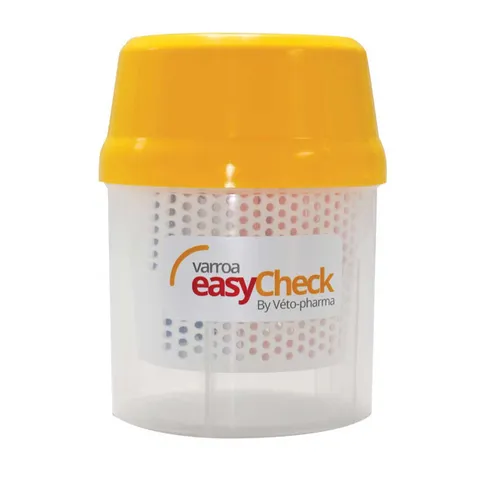
The $26 purchase with the highest return on a colony's survival odds. It standardizes an alcohol wash, sugar roll or CO2 sample so your mite counts are comparable month to month and yard to yard.

Best for: Every beekeeper, and especially anyone selling honey who needs a treatment record they can defend.

Molded lines for a 200 or 300 bee sample remove the guesswork that makes counts useless · Supports three methods in one tool, so you can switch without new gear · Transparent bowl makes mites easy to count against the white basket · Cheap enough to keep one in every truck or yard box

The accurate alcohol-wash method kills the sampled bees, which some keepers resist · Plastic construction will not survive being stepped on · Tells you your infestation level and nothing about what to do next

4 x 7 Stainless Steel Smoker with Shield (M00927)
Budget

4. 4 x 7 Stainless Steel Smoker with Shield (M00927)

Dadant

$49–$70

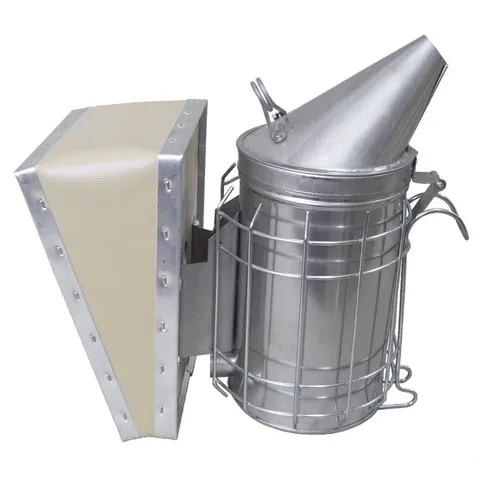
American-made stainless with a bellows that actually pushes smoke, and a heat shield so you can set it down near dry grass without a second thought. Buy this once and stop buying smokers.

Best for: Anyone replacing a bundled kit smoker that has already rusted or stopped drawing.

Stainless body resists the rust-through that kills galvanized smokers in two seasons · Bellows design produces steady cool smoke rather than sparks · Shield and hook let you hang it on a hive body between boxes · 4 x 7 size holds enough fuel for a full yard inspection

No included fuel, and pellets or burlap are an ongoing small cost · The larger 4 x 10 is a better fit if you run more than about fifteen colonies · Bellows leather eventually needs replacing

The Original Beeswax Coated Beehive Kit, 2 Deep and 1 Medium (Unassembled)
Best BudgetBudget

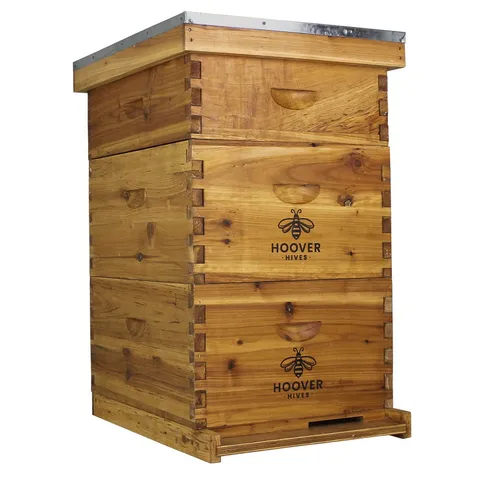
5. The Original Beeswax Coated Beehive Kit, 2 Deep and 1 Medium (Unassembled)

Hoover Hives

$149–$220

Fir woodenware steeped in wax rather than painted, which means no priming weekend and no repainting every few years. You trade an afternoon of assembly for roughly $80 off a comparable finished kit.

Best for: The budget-conscious homesteader adding a second or third colony who does not mind a build day.

Wax dipping penetrates the wood, so weather protection does not chip off like paint · Includes queen excluder, entrance reducer and 30 frames with foundation · Dovetail joints with predrilled holes make assembly straightforward · Standard Langstroth dimensions, so it mixes with any other supplier's boxes

Unassembled means glue, screws and a couple of hours per box · Fir is softer than the pine used in premium woodenware · Stock runs out seasonally and preorder waits are common in spring

Formic Pro
Budget

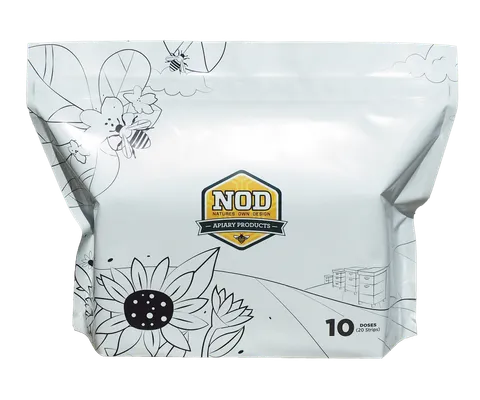
6. Formic Pro

NOD Apiary Products

$20–$75

Formic acid gel strips that reach mites under capped brood and can be applied with honey supers in place. For a farm selling honey, that combination is hard to replicate with anything else.

Best for: Small producers who need a mite treatment they can run in season without pulling honey supers.

Approved for use with supers on, so a summer treatment does not cost you the harvest · Reaches mites inside capped brood cells, which most contact treatments cannot · Two-year shelf life at room temperature, no refrigeration · Sold in 2-dose packs so a two-hive homestead is not buying a case

Needs a daytime temperature window, roughly 50F to 85F, or it can harm the colony · Queen loss and brood setback happen occasionally even when used correctly · Fumes require gloves and eye protection during application

Ultra Breeze Jumpsuit
Best PremiumPremium

7. Ultra Breeze Jumpsuit

Ultra Breeze

$289–$310

Three layers of ventilated mesh sewn in the United States, with a detachable hood that holds the veil well off your face. It is the suit long-time keepers point to when someone asks what is worth the money.

Best for: The keeper running enough colonies that suit comfort and durability decide how often they inspect.

Mesh depth keeps stingers from reaching skin even through a pressed-against fold · Two-way YKK brass zippers and knee-length leg zippers hold up over years · Roomy detachable hood improves visibility and airflow around the face · Replacement hoods and zippers are sold separately, so the suit is repairable

Roughly $100 more than a capable mid-tier ventilated suit · Mesh snags on barbed wire and thorny brush · Bulky to pack and slow to dry after a wash

Premium

8. 3100P 9 Frame Radial Power Honey Extractor

Maxant Industries

$1,000–$1,110

A 304 food-grade stainless radial extractor built in Massachusetts with a lifetime warranty on the stainless. This is the machine that turns a honey hobby into a product line you can actually bottle on schedule.

Best for: Small farms harvesting from six or more colonies who sell honey and need extraction to stop eating weekends.

Radial basket spins both sides of nine frames at once, no flipping · 20 gauge 304 stainless inside and out with a lifetime warranty on the steel · Conical bottom drains fully with no gasket to leak or perish · US-made motor and controls with parts and service actually available

The leg kit is a separate purchase at around $107 · Needs a dedicated warm, closable extraction space · Overkill below roughly six producing colonies

Apivar 2.0 Varroa Mite Treatment Strips
Budget

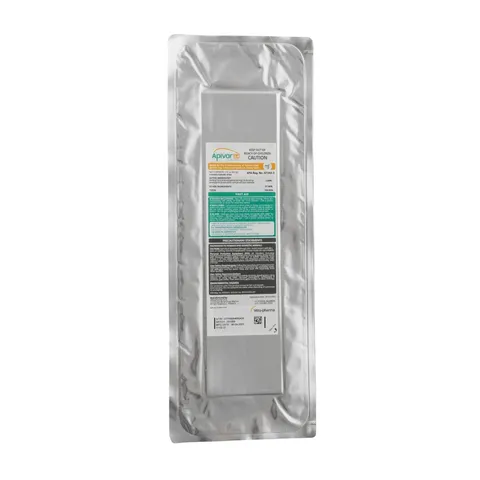
9. Apivar 2.0 Varroa Mite Treatment Strips

Mann Lake

$25–$60

Amitraz strips with no temperature restriction, which makes them the reliable fall treatment when formic acid's weather window has closed. Rotating between the two is how you keep both working.

Best for: The fall or broodless-period treatment in a rotation, especially where formic acid weather windows are short.

No temperature limits, so late-season and hot-climate treatment stays possible · Effective up to ten weeks with brood present, six weeks broodless · Contact delivery spreads through the colony as bees walk the strips · Sold in 4-strip and 12-strip packs, sized for small apiaries

Cannot be used with honey supers on the hive · Amitraz resistance is documented in some regions, so rotation is not optional · Cannot be shipped to Connecticut and is US-only

BroodMinder-W5 Hive Weight Scale
Mid-range

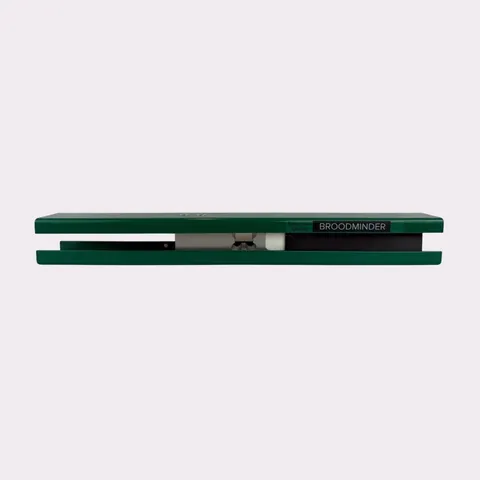
10. BroodMinder-W5 Hive Weight Scale

BroodMinder

$250–$275

A steel under-hive scale that logs weight and temperature hourly for over a year on AA batteries, with no subscription. It tells you when the nectar flow started and whether a colony is running out of stores, without opening anything.

Best for: Operators tracking nectar flow and winter stores across a yard instead of guessing by hefting boxes.

Reads to 0.01 pound with temperature compensation, up to 500 pounds · Data uploads by Bluetooth on your normal yard visit, no gateway required · Powder-coated steel built to sit outdoors through a winter · No subscription needed to access your own data

One scale reads half the hive, so full-hive weight means buying a pair · Setup and app pairing are fiddlier than the hardware suggests · Backorders are common and lead times can run weeks

Flow Hive 2+ (6 Frame, Western Red Cedar)
Premium

11. Flow Hive 2+ (6 Frame, Western Red Cedar)

Flow

$899–$1,059

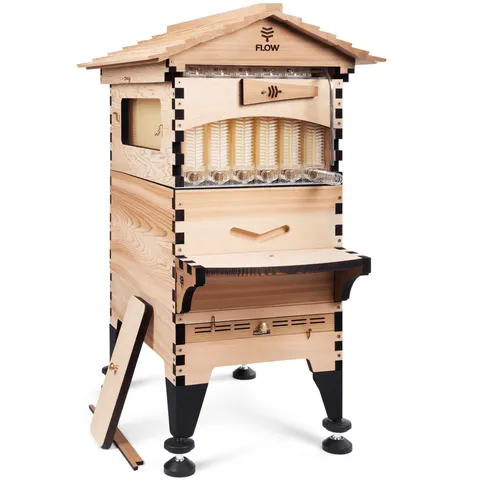
Western red cedar with tap-and-drain Flow Frames, observation windows and a base built for pest and ventilation control. Expensive as a hive, but genuinely useful as a visitor-facing demonstration on a farm that hosts people.

Best for: Agritourism operations and farm stands that want a hive guests can watch and a harvest they can witness.

Honey drains into a jar without opening the hive, which is safe to show to guests · Two observation windows let visitors see bees with no protective gear · Western red cedar and brass hardware weather well with minimal finishing · Base includes ventilation controls, a pest tray and built-in levels

Three to four times the cost of a conventional complete hive kit · Does not reduce inspections, mite monitoring, feeding or overwintering work · A full six-frame Flow super holds around 40 pounds and is heavy to handle

How we choose

We ranked on what a working homestead or small farm actually needs first, not on price and not on feature count. Rank 1 goes to the item most people should buy soonest, which is why a mid-priced complete hive kit and a ventilated suit outrank a $1,000 extractor that most readers should not buy until their third season. Every product here was checked against a manufacturer or established beekeeping-supply retailer page in September 2026 for current availability and street price, and prices are the ranges we saw across those retailers rather than a single listing. Budget means the item does the job with your labor filling the gap, such as unassembled woodenware you finish yourself. Mid means assembled, finished and supported by a supplier with parts. Premium means American-made stainless, a lifetime or multi-year warranty, or a structural design difference that buys back real hours at scale. We do not accept payment, samples or placement fees from any manufacturer, and no brand reviewed the list before publication. Some links may earn us a commission, which does not affect rank or what we say about a product.

Common questions

Budget roughly $600 to $900 all in for a single colony done properly. A complete assembled hive kit runs $150 to $240, bees are the biggest single line at $160 to $260 for a package or nuc depending on your region, protective gear is $60 to $190, and a smoker, hive tool and mite tester add another $80 to $110. Feed and a first varroa treatment cost $40 to $80. The number people miss is the second box of woodenware you will need by midsummer if the colony grows well, which is another $60 to $90. Two colonies cost far less than double, because tools, smoker, suit and extraction gear are shared.

Most experienced keepers running fewer than twenty colonies wear a ventilated jacket, not a full suit. It is faster to put on, cooler, and covers the part of you bees actually defend. Buy the full suit if you are new and nervous, if you work colonies with unknown temperament, or if you host visitors and want them fully covered with no judgment call about tucked pant legs. For an agritourism operation, keep two or three spare jackets in different sizes for guests. Guest gear takes abuse, so a $155 jacket you can replace beats a $289 suit you cannot.

Not in year one, and often not in year two. A first-year colony rarely gives a surplus harvest, and most county or regional beekeeping associations rent extractor time cheaply or free to members. The break-even is usually around six to eight producing colonies, or the point where borrowed extractor scheduling starts costing you a weekend. When you do buy, buy once. A hand-crank unit is fine to about six colonies and becomes miserable above that, so if your plan is a honey product line, skip straight to a powered radial machine and buy stainless with a warranty.

For demonstration value, yes, with one caveat. The tap-and-drain harvest is genuinely compelling to guests and lets you show honey coming out of a hive without opening it, protecting people and bees at the same time. The caveat is that it does not reduce the beekeeping. You still inspect the brood nest, still monitor mites, still feed and still overwinter, and a Flow super full of honey is heavy and needs the same warm-weather handling as any other. Treat it as a visitor-facing showpiece alongside conventional hives, not as a replacement for learning the craft.

Start with monitoring, not treatment. An alcohol wash or sugar roll on 300 bees takes five minutes and tells you whether you have a problem, and treating blind is how resistance builds. Once you have a count, formic acid products are the usual first choice for a small operation because they can be applied with honey supers on and they reach mites under capped brood, though they need a temperature window. Amitraz strips are the workhorse alternative when supers are off, with a longer treatment period and no temperature restriction. Rotate chemistries between seasons and follow the label exactly, especially the honey-super rules, if you are selling what you harvest.

Ten-frame is the industry default and gives a colony more room per box, which means fewer boxes to manage and better winter cluster size in cold regions. A full ten-frame deep can weigh 80 to 90 pounds, which is the real objection. Eight-frame equipment drops that to roughly 60 to 70 pounds and is worth the trade if lifting is a constraint or if you plan to have guests or younger family members handling boxes. Whichever you choose, standardize the whole yard on it. Mixed sizes mean you can never swap a box between colonies, and that flexibility is worth more than either format's advantages.

Some links are affiliate links, and we may earn a commission at no extra cost to you. It never affects our rankings.

In your pocket

Take farm country with you.

Free, no account needed. Farm maps, season checklists, and the crop identifier in your pocket.

  • Every farm stand and u-pick in your pocket

  • Plan a multi-stop farm day and save it

  • Snap a photo. AI names the crop

  • GPS tracking that keeps recording down the county road

The Farm Country Hubs app dashboard

For operators

Run a farm business?
Get on the map for free.

Claim your free listing for a branded page and a spot in the Farm Country Hubs app, then add bookings and digital waivers whenever you’re ready. No setup cost.